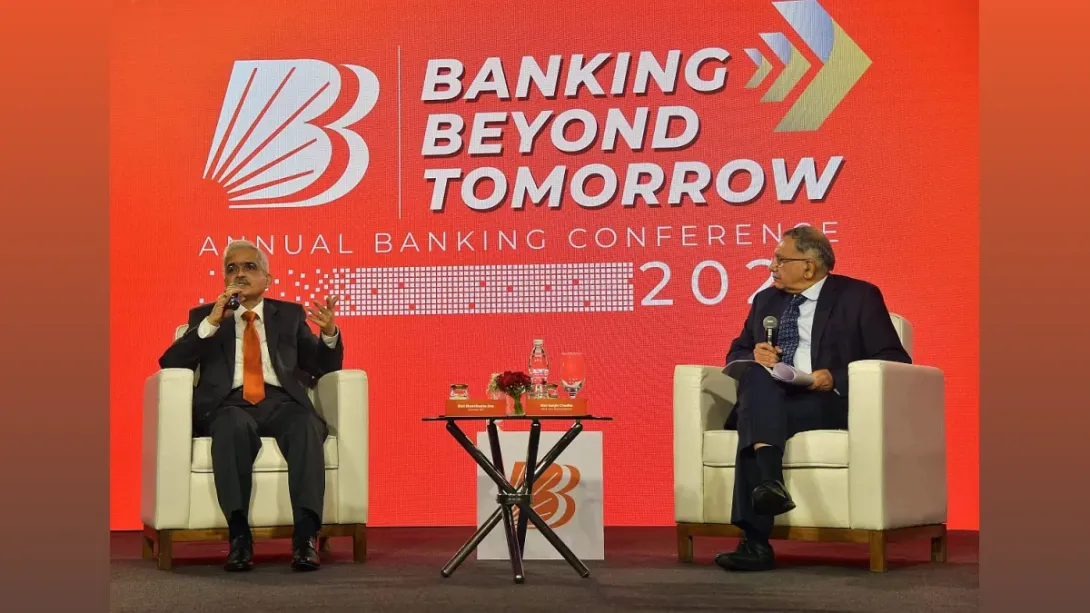
Bank of Baroda has outlined ambitious corporate lending plans for FY27, targeting a 10 per cent expansion in its Rs. 4.56 lakh crore corporate loan portfolio while maintaining a pipeline of approximately Rs. 50,000 crore in prospective large-ticket financing opportunities. The strategy comes amid broader market concerns regarding subdued private sector capital expenditure in India. However, Managing Director and Chief Executive Debadatta Chand indicated that strong demand for term loans suggests investment activity remains active across several sectors. He also signaled that coordinated policy support and stakeholder collaboration could potentially unlock fresh lending opportunities within the telecom industry, including cases involving stressed operators.
Bank of Baroda Sets Aggressive Corporate Lending Target
Bank of Baroda is preparing for a significant expansion in corporate lending as it seeks to strengthen its position within India’s large-scale financing market.
The state-owned lender aims to increase its corporate loan book, currently valued at Rs. 4.56 lakh crore, by approximately 10 per cent during the 2026-27 financial year. In addition, the bank has identified a lending pipeline of nearly Rs. 50,000 crore comprising prospective large-ticket corporate financing opportunities.
The planned growth reflects improving confidence among major lenders regarding medium-term investment activity across infrastructure, manufacturing, telecommunications, and industrial sectors.
Banking analysts note that large corporate credit growth often serves as a broader indicator of business confidence and economic expansion expectations within the financial system.
Term Loan Demand Signals Investment Activity
Addressing concerns surrounding relatively sluggish private capital expenditure trends, Debadatta Chand highlighted that nearly two-thirds of the bank’s current corporate lending proposals involve term loans rather than short-term working capital requirements.
This distinction is strategically important because term loans are generally associated with fresh investment activity, capacity expansion, and long-term infrastructure development rather than routine operational financing.
According to Chand, the composition of the pipeline suggests that companies remain willing to pursue expansion despite global economic uncertainty and elevated financing costs.
Economists frequently monitor term loan demand as a forward-looking signal of private-sector investment sentiment and industrial growth momentum.
The trend may therefore indicate gradual improvement in India’s capital expenditure cycle after a prolonged period of cautious corporate spending.
Private Capex Recovery Remains Key Economic Focus
India’s banking sector has been closely tracking the pace of private capital expenditure recovery, particularly as the government continues to increase public infrastructure spending to support broader economic growth.
While public investment has remained strong, economists have repeatedly stressed that sustained long-term economic expansion will ultimately require stronger participation from private industry.
Large banks such as Bank of Baroda are therefore positioning themselves to benefit from a potential acceleration in corporate borrowing demand over the coming years.
Industry observers believe sectors including infrastructure, renewable energy, manufacturing, logistics, and digital services are likely to remain key drivers of future corporate credit growth.
Telecom Lending Discussion Draws Attention
Debadatta Chand also addressed questions surrounding lending exposure to the telecommunications sector, particularly amid continued market speculation regarding the financial restructuring efforts involving Vodafone Idea.
Chand suggested that appropriate policy measures combined with coordinated participation from banks and stakeholders could create conditions for additional financing support within the sector.
The telecom industry remains strategically important to India’s digital economy and infrastructure ambitions, but several operators have faced significant financial stress in recent years due to intense competition, spectrum liabilities, and capital expenditure requirements.
Financial experts note that any large-scale revival financing within telecom would likely require careful coordination between lenders, regulators, investors, and policymakers to ensure long-term viability.
Banking Sector Balances Growth and Risk Management
The expansion strategy outlined by Bank of Baroda reflects a broader shift occurring across India’s banking industry, where lenders are increasingly re-engaging with corporate credit after years of prioritising balance-sheet repair and retail lending growth.
Following a prolonged period focused on reducing non-performing assets, public sector banks have strengthened capital positions and improved asset quality metrics, enabling greater appetite for corporate financing opportunities.
However, analysts caution that aggressive credit expansion must remain balanced with prudent risk management, particularly in sectors vulnerable to economic volatility or regulatory uncertainty.
The experience of previous corporate lending cycles continues to influence how banks assess large infrastructure and industrial projects.
Corporate Lending Seen as Pillar of India’s Growth Story
The renewed focus on large-ticket lending underscores the banking sector’s critical role in supporting India’s long-term economic ambitions.
As the country seeks to strengthen manufacturing output, modernise infrastructure, and expand industrial capacity, access to large-scale financing will remain central to sustaining investment momentum.
For Bank of Baroda, expanding the corporate book is not merely a balance-sheet objective; it is also a strategic effort to align with India’s evolving economic transformation.
If private investment activity continues to recover, banks positioned with strong corporate lending pipelines could become major beneficiaries of the country’s next phase of industrial and infrastructure expansion.
Comments