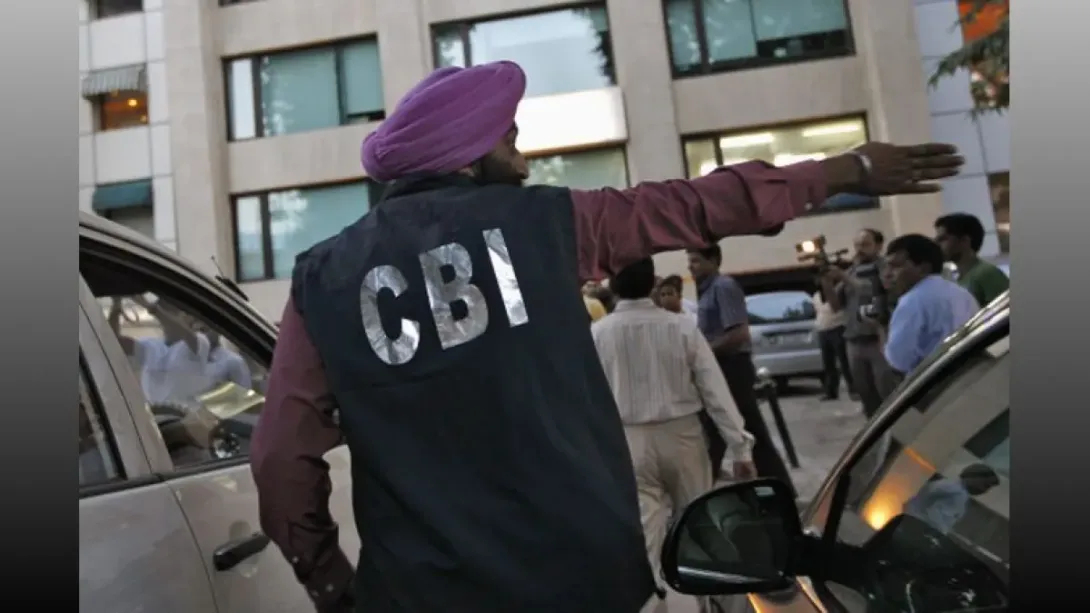
The Central Bureau of Investigation (CBI) conducted searches at 17 locations across Mumbai in connection with three cases involving Reliance ADA Group companies — Reliance Telecom Limited, Reliance Commercial Finance Limited, and Reliance Home Finance Limited. The investigation focuses on alleged diversion of bank funds through intermediary entities and includes scrutiny of directors, officials, and associated corporate networks. Authorities said the searches targeted both residential and office premises linked to individuals and firms under investigation. The development marks another significant escalation in India’s ongoing crackdown on suspected financial irregularities and corporate lending misconduct within the banking and non-banking financial sectors.
CBI Expands Probe Into Alleged Financial Irregularities
The Central Bureau of Investigation intensified its investigation into alleged financial misconduct involving multiple Reliance ADA Group-linked entities by carrying out coordinated searches across Mumbai on Saturday.
According to officials, the agency conducted raids at 17 locations tied to three companies — Reliance Telecom Limited, Reliance Commercial Finance Limited, and Reliance Home Finance Limited.
The searches were part of three separate cases registered by the investigative agency concerning allegations of fund diversion and misuse of banking channels.
Authorities stated that the operation covered residential premises associated with company directors as well as offices connected to intermediary firms allegedly used in routing or diverting bank funds.
The investigation represents a major development in India’s broader efforts to examine suspected irregularities involving corporate borrowing structures and financial-sector governance.
Focus on Alleged Diversion of Bank Funds
Investigators are examining whether funds obtained through banking channels were diverted using intermediary corporate entities rather than being utilized for their intended commercial purposes.
According to the CBI, certain intermediary companies allegedly played a role in facilitating transactions connected to the movement of funds under scrutiny.
Financial diversion cases typically involve allegations that borrowed capital was transferred through layered corporate structures, potentially obscuring the final destination or actual utilization of the money.
Such investigations often require extensive forensic analysis of:
- Banking transactions
- Corporate ledgers
- Inter-company transfers
- Loan documentation
- Beneficial ownership structures
Authorities have not yet disclosed the total financial exposure involved in the current investigation.
However, the scale of the searches suggests investigators are pursuing a wide-ranging review of financial linkages connected to the companies under scrutiny.
Reliance ADA Group Faces Renewed Regulatory Attention
The latest CBI action places renewed focus on businesses formerly associated with the Reliance ADA Group, which has faced multiple financial and regulatory challenges in recent years.
Several group-linked companies have undergone debt restructuring pressures, asset monetization efforts, and heightened scrutiny from lenders and enforcement agencies amid concerns related to financial sustainability and governance practices.
The current investigation adds another layer of regulatory complexity for entities associated with the group, particularly at a time when India’s financial system is increasingly emphasizing accountability in corporate lending and debt management.
The involvement of housing finance and commercial finance businesses in the investigation is particularly significant given the broader sensitivity surrounding India’s non-banking financial sector over the past decade.
Banking Sector Vigilance Intensifies
The case reflects a broader institutional push by Indian investigative and regulatory agencies to strengthen oversight of large corporate borrowing practices.
Following several high-profile banking and financial-sector crises in recent years, authorities have intensified scrutiny over:
- Loan disbursement processes
- End-use monitoring of borrowed funds
- Corporate governance practices
- Related-party transactions
- Financial disclosure standards
Public-sector banks and financial institutions have also faced growing pressure to improve risk management systems and strengthen credit-monitoring frameworks.
Investigations involving alleged fund diversion are viewed seriously because they directly affect banking-sector stability, lender confidence, and recovery prospects for financial institutions.
The CBI’s actions therefore align with a wider regulatory trend toward aggressive enforcement in cases involving suspected financial misconduct.
Intermediary Entities Under the Scanner
A key aspect of the investigation appears to involve intermediary firms whose accounts were allegedly used in financial transactions under scrutiny.
In complex corporate finance structures, intermediary companies can sometimes be used to route funds through multiple layers of transactions, complicating efforts to trace financial flows.
Investigators are likely examining whether such entities functioned as legitimate commercial intermediaries or whether they were used primarily to facilitate diversion or concealment of funds.
Financial probes involving layered corporate transactions often require coordination between multiple agencies, including banking regulators, forensic auditors, and enforcement authorities.
The outcome of such investigations can have implications not only for the companies directly involved but also for lenders, investors, and broader market confidence.
Corporate Governance Under Increasing Scrutiny
The investigation also reflects the rising importance of corporate governance standards in India’s evolving financial ecosystem.
Institutional investors, lenders, and regulators are placing increasing emphasis on transparency, disclosure quality, and accountability mechanisms within large business groups.
Cases involving alleged misuse of borrowed funds can significantly affect:
- Investor confidence
- Credit ratings
- Access to capital markets
- Banking relationships
- Market reputation
As India’s financial markets deepen and attract greater global participation, governance standards are becoming increasingly central to corporate valuation and institutional credibility.
Investigative actions of this nature therefore carry both legal and reputational consequences.
Financial Sector Stability Remains a Policy Priority
The broader policy context surrounding the investigation is equally significant.
Over the past several years, Indian authorities have worked to strengthen banking-sector resilience following periods of elevated non-performing assets and corporate debt stress.
Measures including tighter insolvency frameworks, improved loan-monitoring systems, and stronger enforcement mechanisms have aimed to reduce systemic vulnerabilities within the financial system.
Investigations into alleged diversion of funds form part of that larger institutional effort to reinforce financial discipline and restore confidence in lending ecosystems.
Regulators increasingly view accountability and transparency as essential to sustaining long-term credit growth and economic stability.
Legal Proceedings Likely to Continue Over Extended Period
Financial investigations involving large corporate structures are typically lengthy and document-intensive.
The searches conducted by the CBI represent an early operational phase in what could evolve into a prolonged legal and forensic process involving examination of financial records, transaction trails, and corporate relationships.
Authorities may continue collecting documentary evidence, digital records, and financial statements as part of the investigation.
At this stage, the searches themselves do not constitute a judicial determination of wrongdoing. However, they indicate that investigators believe sufficient preliminary grounds exist to justify expanded inquiry.
Further developments are likely to depend on forensic findings, transaction analysis, and the legal interpretation of corporate fund movements under applicable financial and criminal statutes.
Enforcement Climate Signals Tougher Regulatory Era
The latest action by the CBI reinforces an increasingly clear message emerging across India’s financial landscape: regulatory tolerance for opaque corporate financial practices is narrowing.
Investigative agencies are demonstrating greater willingness to pursue complex financial cases involving large institutions and influential corporate entities.
For India’s corporate sector, the evolving enforcement environment signals the growing importance of:
- Financial transparency
- Compliance discipline
- Governance integrity
- Responsible capital utilization
As India continues positioning itself as a major global investment destination, institutional credibility and financial accountability are likely to remain central pillars of economic policy and regulatory enforcement.
Comments