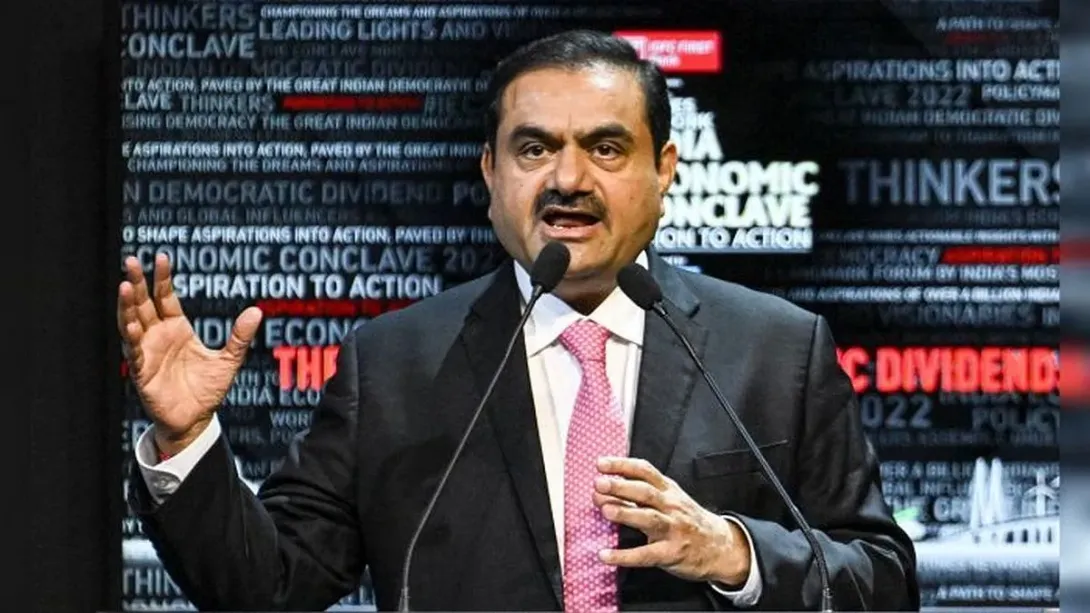
Gautam Adani has announced a comprehensive internal transformation strategy for the Adani Group, focusing on faster decision-making, streamlined operations, and workforce development. Addressing employees on International Labour Day, Adani outlined a “three-layer model” aimed at flattening organizational hierarchies and enhancing execution speed. The plan also introduces a partnership-driven approach to vendor management and a renewed emphasis on skill development through initiatives like the proposed Adani Training Academy. The transformation reflects the group’s ambition to align its growth trajectory with India’s broader economic and infrastructure expansion.
Strategic Shift: Accelerating Decision-Making
At the core of the transformation is a structural overhaul designed to significantly reduce decision-making timelines. Gautam Adani emphasized the need to compress processes that currently take days into hours, reflecting a shift toward agility and responsiveness.
The proposed “three-layer model” aims to simplify organizational hierarchies, enabling faster communication and execution. This approach is expected to enhance operational efficiency and improve the group’s ability to respond to dynamic market conditions.
Organizational Restructuring: Flattening Hierarchies
The restructuring initiative seeks to eliminate bureaucratic bottlenecks by reducing layers within the organization. By adopting a leaner structure, the Adani Group aims to empower decision-makers at multiple levels.
Such a model not only accelerates execution but also fosters accountability and transparency. In large conglomerates, streamlined hierarchies are increasingly viewed as essential for maintaining competitiveness.
Vendor Strategy: Building Stronger Partnerships
A key component of the transformation plan is the introduction of a partnership-driven vendor model. The group intends to consolidate its network of contractors and suppliers into a smaller, more accountable pool of partners.
This strategy is designed to improve quality, reduce inefficiencies, and strengthen long-term relationships. By aligning incentives and expectations, the company aims to create a more resilient and reliable supply chain ecosystem.
Workforce Development: Investing in Human Capital
Recognizing the importance of skilled talent, the group has announced a renewed focus on workforce development. The proposed Adani Training Academy will play a central role in enhancing employee capabilities and supporting career progression.
Investments in training and upskilling are critical for sustaining growth, particularly in sectors that require specialized expertise. Such initiatives also contribute to employee retention and organizational stability.
Economic Context: Aligning with National Growth
Gautam Adani linked the group’s transformation to India’s broader development ambitions, highlighting the role of large corporations in driving economic progress.
As India continues to expand its infrastructure and industrial base, conglomerates like the Adani Group are positioned to play a pivotal role. Their investments and operational strategies often have ripple effects across the economy, influencing sectors measured in thousands of crores (Rs.).
Strategic Implications: Enhancing Competitiveness
The transformation plan reflects a forward-looking approach aimed at enhancing the group’s competitiveness in both domestic and global markets. By focusing on speed, efficiency, and talent development, the company is positioning itself to capitalize on emerging opportunities.
Such strategic realignment is essential in an increasingly complex business environment, where adaptability and innovation are key drivers of success.
Conclusion: A Blueprint for Future Growth
The internal overhaul announced by the Adani Group marks a significant step in its evolution. By prioritizing faster decision-making, stronger partnerships, and workforce development, the group is laying the foundation for sustained growth.
As Gautam Adani aligns corporate strategy with national economic goals, the initiative underscores the growing intersection between business transformation and broader development agendas.
Comments