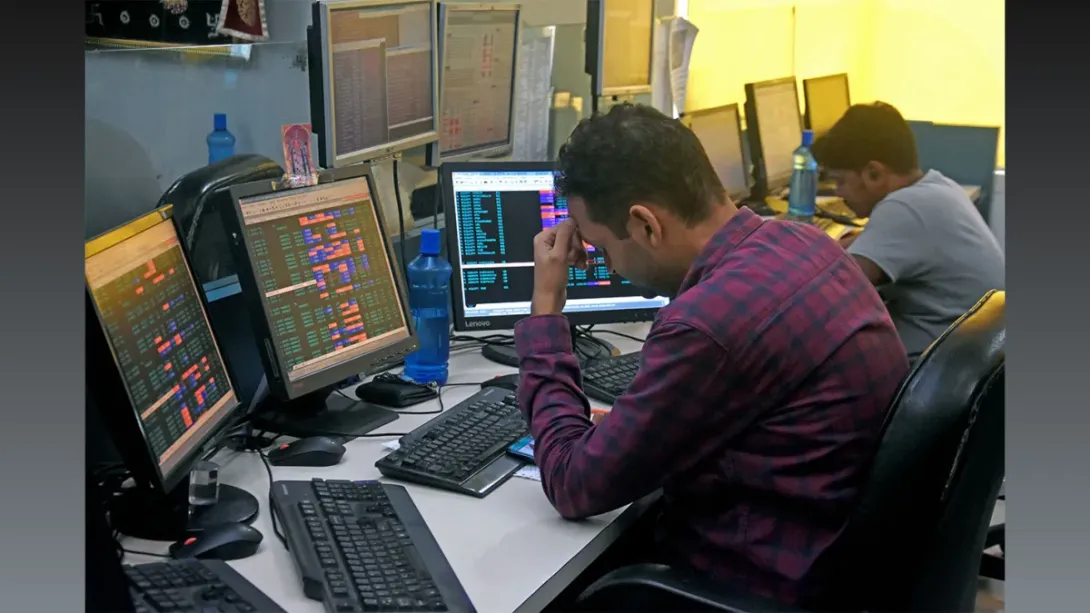
Global geopolitical developments and crude oil price fluctuations are expected to play a decisive role in determining the direction of equity markets in the coming week. Analysts say investor sentiment will remain closely tied to developments surrounding the ongoing conflict in West Asia, which has already triggered volatility in global energy markets. In addition, market participants will carefully monitor key domestic macroeconomic indicators, including wholesale inflation data, trade balance figures, and foreign exchange reserves. Internationally, the upcoming interest rate decision by the US Federal Reserve and its economic outlook will be crucial in shaping capital flows and investor confidence across global financial markets.
Geopolitical Developments Driving Market Sentiment
Financial markets are expected to remain highly sensitive to geopolitical developments, particularly the evolving conflict in West Asia. The situation has already caused sharp fluctuations in global crude oil prices, which in turn directly influence investor sentiment in equity markets.
Oil price volatility affects multiple sectors, including transportation, manufacturing, and energy-intensive industries. When crude prices surge, it raises concerns about inflation and corporate profitability, often leading to cautious investor behavior.
Market participants are therefore expected to closely monitor geopolitical updates during the week, as any escalation could trigger further volatility in both commodity and equity markets.
Crude Oil Prices and Their Market Impact
Crude oil remains a critical macroeconomic variable for global financial markets. Sharp increases in oil prices tend to push inflation higher by increasing production and transportation costs across industries.
For emerging economies such as India, which depend heavily on imported crude oil, sustained price increases can widen trade deficits and pressure currency stability. These developments often have a cascading effect on equity markets.
As a result, movements in global oil benchmarks will be a key factor influencing trading patterns and investment strategies during the week.
Domestic Economic Indicators in Focus
Apart from global developments, domestic economic data will also play an important role in shaping market sentiment.
Investors will closely track the release of wholesale price index (WPI) inflation data, which provides insights into price trends at the producer level. Rising inflation may signal increasing cost pressures for businesses and influence monetary policy expectations.
Additionally, the balance of trade figures will offer an indication of the country’s export-import dynamics, while foreign exchange reserves data will reflect the strength of India’s external financial position.
Together, these indicators will provide important clues about the health of the domestic economy.
Global Spotlight on US Federal Reserve Policy
Internationally, the most significant event for global markets will be the upcoming policy decision by the US Federal Reserve. Investors worldwide are waiting for signals regarding the central bank’s future interest rate trajectory.
The Federal Open Market Committee (FOMC) is also expected to release updated economic projections, which could provide insights into the outlook for inflation, employment, and economic growth in the United States.
Because US monetary policy significantly influences global liquidity and capital flows, any indication of tighter or looser financial conditions could have ripple effects across international equity markets.
Market Volatility After Last Week’s Sharp Decline
The upcoming trading week follows a period of significant volatility in Indian equity markets. Benchmark indices experienced sharp losses, reflecting widespread investor caution amid global uncertainty.
The BSE Sensex declined by 4,354.98 points, representing a drop of approximately 5.51 percent during the previous week. Similarly, the NSE Nifty index fell by 1,299.35 points, or roughly 5.31 percent.
Such steep declines often prompt investors to reassess portfolio strategies and wait for clearer signals before re-entering the market.
Investor Strategy in an Uncertain Environment
Market analysts suggest that investors are likely to adopt a cautious approach in the near term, given the combination of geopolitical risks, macroeconomic data releases, and global monetary policy developments.
Volatility may persist as traders respond to new information related to oil prices, inflation trends, and central bank decisions. In such environments, sectors with strong balance sheets and stable earnings prospects often attract relatively higher investor interest.
Diversification and disciplined risk management are expected to remain key strategies for navigating market uncertainty.
Outlook for the Week Ahead
Looking ahead, financial markets are poised for a week marked by heightened attention to global and domestic developments. The interplay between geopolitical tensions, energy prices, and monetary policy decisions will likely determine the direction of investor sentiment.
While short-term volatility may continue, analysts note that long-term market performance will ultimately depend on broader economic fundamentals, corporate earnings growth, and global financial stability.
For investors and market observers alike, the coming days will offer crucial signals about whether recent market weakness represents a temporary correction or the beginning of a more sustained shift in market dynamics.
Comments