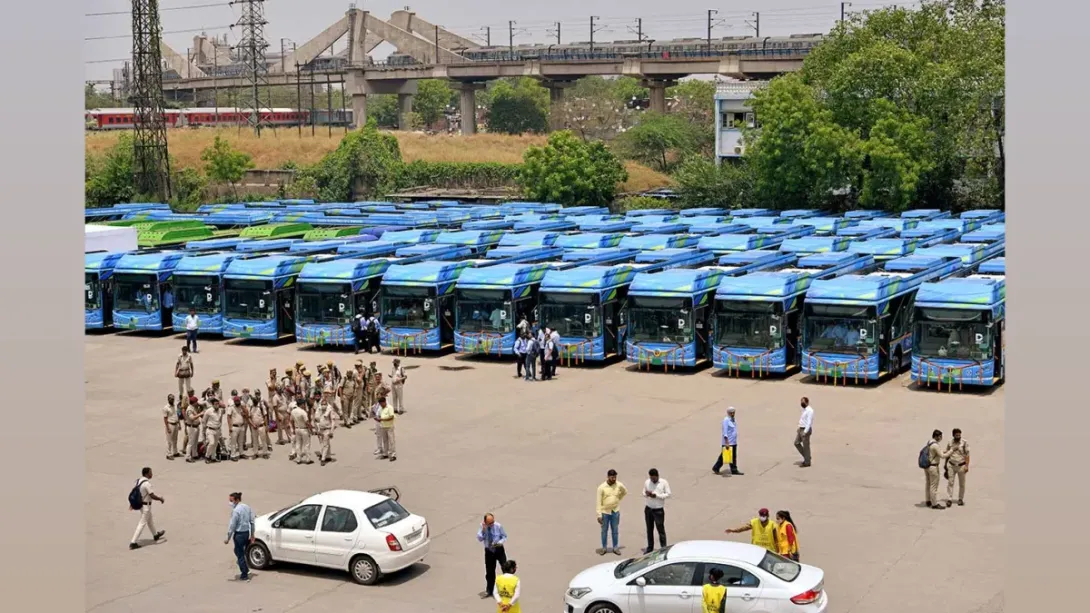
The Government of India has unveiled an ambitious plan to deploy 45,000 electric buses across urban centers, reinforcing its commitment to sustainable mobility and pollution reduction. Under the PM e-Bus Sewa Scheme, 10,000 air-conditioned e-buses will be introduced in 116 cities by 2027, followed by a new initiative targeting an additional 35,000 buses.
The program aims to address funding constraints faced by states while improving public transport in mid-sized cities. This large-scale electrification effort is expected to reduce emissions, enhance urban connectivity, and stimulate investment in green infrastructure, positioning India as a key player in the global transition to clean transportation systems.
Government’s Strategic Push Toward Electrified Public Transport
The Indian government has intensified its efforts to modernize urban mobility through large-scale electrification of public transport systems. Under the PM e-Bus Sewa Scheme, authorities plan to deploy 10,000 air-conditioned electric buses across 116 cities in 26 states and Union Territories by the end of 2027.
The initiative, announced under the leadership of Narendra Modi, is designed to enhance mobility in smaller cities while addressing rising air pollution levels.
Expansion Plan: Scaling Up to 45,000 E-Buses
Building on the initial rollout, the government has outlined a follow-up scheme that will introduce an additional 35,000 electric buses nationwide. This expansion significantly increases the scale of India’s clean mobility ambitions.
The phased approach reflects a pragmatic strategy—first establishing operational frameworks and infrastructure, then scaling up deployment based on learnings and demand. Combined, the two phases will bring the total planned fleet to 45,000 e-buses.
Focus on Mid-Sized Cities
A key feature of the scheme is its emphasis on cities with populations ranging between 300,000 and 4 million. These urban centers often face growing transportation demand but lack adequate funding and infrastructure for modern transit systems.
By targeting such cities, the program aims to bridge the mobility gap while ensuring equitable access to clean transportation. This approach also reduces congestion and pollution in rapidly urbanizing regions.
Addressing Financial Constraints
One of the primary challenges in adopting electric buses has been the high upfront cost, which many state governments struggle to finance. The central government’s intervention under this scheme helps mitigate these financial barriers.
Through structured funding and support mechanisms, the initiative enables states to adopt electric mobility without bearing the full financial burden. This collaborative model is expected to accelerate adoption rates and improve operational viability.
Environmental and Economic Impact
The transition to electric buses is expected to deliver significant environmental benefits, including reduced greenhouse gas emissions and improved air quality in urban areas. With transportation being a major contributor to pollution, electrification offers a sustainable alternative.
From an economic perspective, the initiative is likely to stimulate domestic manufacturing, create jobs, and encourage investment in charging infrastructure and related technologies. It also aligns with India’s broader climate commitments and clean energy goals.
Strengthening Urban Infrastructure
The deployment of thousands of e-buses will necessitate parallel investments in charging networks, maintenance facilities, and grid capacity. This infrastructure development will play a critical role in ensuring the long-term success of the program.
Additionally, improved public transport systems can enhance productivity by reducing travel time and increasing connectivity across urban regions.
Outlook: Toward a Sustainable Mobility Ecosystem
India’s aggressive push toward electric public transport reflects a broader shift in policy priorities toward sustainability and innovation. As the program progresses, its success will depend on efficient implementation, stakeholder coordination, and technological advancements.
For industry players and investors, the initiative presents substantial opportunities in manufacturing, infrastructure, and energy sectors. It also signals a long-term commitment to green mobility.
Conclusion
The expansion of the PM e-Bus Sewa Scheme marks a transformative step in India’s urban transport landscape. By combining environmental objectives with infrastructure development, the government is laying the foundation for a cleaner, more efficient mobility ecosystem.
As the country moves toward large-scale electrification, the initiative is poised to redefine public transportation while contributing to economic growth and environmental sustainability.
Comments