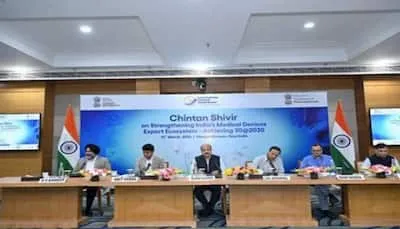
India’s medical device industry is witnessing robust growth, with exports surpassing USD 4 billion in FY25 and ambitious plans to reach a USD 30 billion market by 2030. Leveraging a significant domestic market and rising global demand for affordable, high-quality medical technologies, India is positioning itself as a reliable manufacturing and export hub. Government initiatives, industry collaboration, and regulatory reforms are key drivers in strengthening the MedTech ecosystem. Recent deliberations at a Chintan Shivir highlighted strategies to enhance quality standards, address structural bottlenecks, and expand India’s global competitiveness in medical device manufacturing and exports.
Export Growth and Market Potential
India’s medical device exports crossed USD 4 billion in FY25, reflecting a growing global appetite for affordable, high-quality healthcare solutions. With a strong domestic market providing scale, the country is well-positioned to leverage manufacturing capabilities for global supply chains. Government officials emphasised the importance of quality and innovation to establish India as a preferred MedTech hub.
The industry aims to achieve a USD 30 billion market by 2030, driven by increasing domestic demand, rising healthcare investments, and expanding international trade partnerships. India’s strategic focus on both cost efficiency and quality standards enables it to cater to developed and emerging markets simultaneously.
Strengthening the MedTech Ecosystem
The “Strengthening India’s Medical Devices Export Ecosystem” Chintan Shivir, organised by the Department of Commerce in collaboration with the Department of Pharmaceuticals and the Export Promotion Council for Medical Devices (EPCMD), brought together regulators, policymakers, and industry stakeholders. Discussions centred on enhancing manufacturing quality, boosting innovation, and creating a conducive regulatory environment.
Aman Sharma, Joint Secretary at the Department of Pharmaceuticals, stressed the necessity of aligning industry practices with global quality standards. He urged close collaboration between regulators and manufacturers to ensure that Indian-made medical devices meet stringent international benchmarks.
Lav Aggarwal, Additional Secretary and Director General at the Directorate General of Foreign Trade (DGFT), highlighted structural challenges that must be addressed to accelerate growth. Streamlining approval processes, providing export incentives, and improving infrastructure were identified as key levers to support India’s global competitiveness.
Policy and Industry Collaboration
Effective policy frameworks and public-private partnerships are central to India’s MedTech strategy. By combining regulatory oversight with industry-led initiatives, the sector can expand production capabilities, improve compliance, and strengthen brand reputation internationally. Focus areas include advanced diagnostics, imaging equipment, surgical instruments, and patient monitoring devices.
The government’s support, coupled with India’s cost-competitive manufacturing base, positions the country to become a leading global exporter of medical technologies. Strategic interventions aim to ensure sustainable growth while creating employment and promoting innovation across the healthcare sector.
Outlook
With strong domestic demand, a growing export market, and targeted government policies, India’s medical device industry is on a trajectory toward becoming a global MedTech powerhouse. Achieving a USD 30 billion market by 2030 requires continued focus on quality, innovation, regulatory efficiency, and international market expansion. Collaborative efforts between industry, policymakers, and regulators will be critical in realising India’s potential as a preferred manufacturing and export hub for high-quality medical devices.
Comments