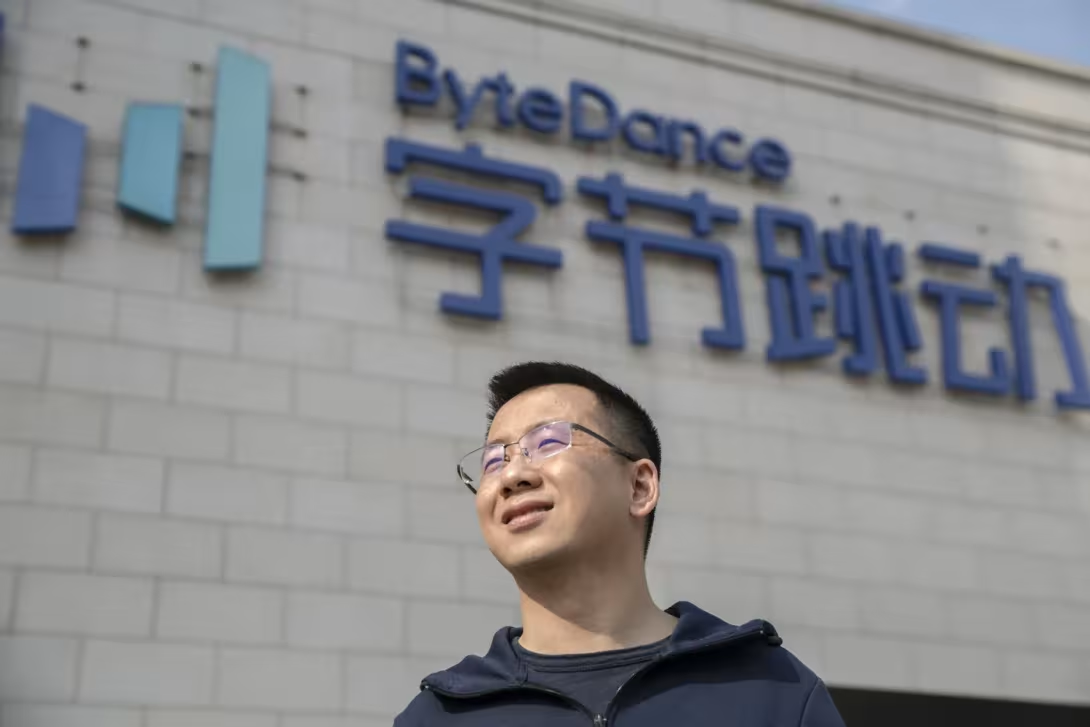
Zhang Yiming, the co-founder of ByteDance, has emerged as Asia’s second-richest individual following a substantial increase in the valuation of the technology giant behind TikTok. The wealth surge reflects growing investor confidence in ByteDance’s expanding artificial intelligence ambitions, particularly the rapid adoption of its AI-powered products in China. The development marks a significant shift in Asia’s billionaire rankings, with Zhang moving ahead of Reliance Industries Chairman Mukesh Ambani. Analysts attribute the rise to ByteDance’s strong financial performance, successful restructuring of its U.S. operations, and aggressive investments aimed at positioning the company as a leading global force in artificial intelligence.
Zhang Yiming’s Wealth Climbs on ByteDance’s Growing Market Value
ByteDance founder Zhang Yiming has strengthened his position among the world’s wealthiest individuals after a sharp rise in the valuation of the Chinese technology conglomerate. His estimated net worth has reached approximately $92.8 billion, placing him ahead of Indian business magnate Mukesh Ambani and making him the second-richest person in Asia.
The increase represents a remarkable wealth creation story. Since global wealth trackers began closely monitoring his fortune in 2019, Zhang's net worth has expanded more than sevenfold, highlighting the extraordinary growth trajectory of ByteDance and its portfolio of digital platforms.
The latest valuation boost underscores the company’s transformation from a social media powerhouse into a diversified technology enterprise with significant exposure to artificial intelligence.
AI Becomes a Major Driver of ByteDance’s Valuation
While TikTok remains one of the world's most influential social media applications, investors are increasingly focusing on ByteDance’s artificial intelligence ecosystem.
A key contributor to this optimism is Doubao, the company’s AI chatbot platform, which has reportedly attracted more than 300 million monthly active users. The rapid adoption of AI services has strengthened confidence that ByteDance can successfully compete in a market increasingly dominated by generative AI technologies.
Industry analysts believe the company’s ability to integrate AI into consumer-facing applications gives it a competitive advantage. Unlike many AI startups that are still searching for scalable business models, ByteDance already possesses a massive user base, established monetization channels, and extensive computing infrastructure.
The success of Doubao has also opened new revenue opportunities, including potential subscription-based services, a relatively uncommon model in China's internet sector where free access has traditionally dominated.
Resolution of U.S. Business Uncertainty Boosts Investor Confidence
Another important catalyst behind ByteDance’s valuation increase has been the easing of long-standing concerns surrounding TikTok’s U.S. operations.
For years, political and regulatory scrutiny created uncertainty regarding TikTok’s future in one of its largest international markets. However, the restructuring of portions of the U.S. business and increased participation from American investors have significantly reduced perceived risks.
As regulatory concerns diminished, investors reassessed ByteDance’s intrinsic value, leading to a stronger market outlook and a higher implied valuation for the remaining business.
Market observers note that the reduction of geopolitical uncertainty has allowed investors to focus more on ByteDance’s underlying financial strength, profitability, and long-term growth prospects rather than regulatory challenges.
Asia’s Wealth Rankings Undergo a Significant Shift
The latest changes have reshaped the hierarchy of Asia’s richest individuals.
With an estimated fortune of $92.8 billion, Zhang Yiming now occupies the second position in the region's wealth rankings. Mukesh Ambani, whose estimated net worth stands at approximately $86.9 billion, has moved to third place.
Meanwhile, Gautam Adani continues to hold the title of Asia’s richest person, with an estimated net worth of about $117.4 billion.
The reshuffling highlights the increasing influence of technology entrepreneurs in wealth creation across Asia. Traditionally dominated by industrial, energy, and infrastructure businesses, the region’s billionaire rankings are now being increasingly shaped by digital platforms, software innovation, and artificial intelligence.
ByteDance Intensifies Its AI Ambitions
ByteDance is reportedly preparing one of the most ambitious investment programs in the global technology sector. The company is evaluating expenditures that could reach as much as $70 billion this year as it seeks to strengthen its leadership position in China's AI market while expanding internationally.
A significant portion of this spending is expected to be financed through internal cash generation. The company is believed to have generated approximately $50 billion in profit during 2025, providing substantial resources for future expansion.
The scale of these investments reflects the intensifying global race for AI dominance, where technology firms are committing unprecedented levels of capital toward computing infrastructure, advanced semiconductor procurement, model development, and talent acquisition.
For ByteDance, success in artificial intelligence could unlock new growth avenues beyond social media, positioning the company as a broader technology platform capable of competing with both Chinese and international AI leaders.
What It Means for Global Technology Markets
Zhang Yiming’s rise in the billionaire rankings illustrates a broader trend reshaping global capital markets: investors are increasingly rewarding companies that demonstrate credible AI capabilities alongside strong cash-generating businesses.
ByteDance’s combination of profitable digital platforms, massive user engagement, and ambitious AI investments has created a compelling growth narrative. As concerns over regulatory uncertainty diminish and artificial intelligence adoption accelerates, the company is emerging as one of the most closely watched technology firms globally.
The latest wealth rankings therefore represent more than a personal milestone for Zhang Yiming. They signal the growing economic power of artificial intelligence and reinforce the idea that the next generation of corporate leaders may be defined not merely by scale, but by their ability to successfully commercialize advanced technologies on a global stage.
Comments