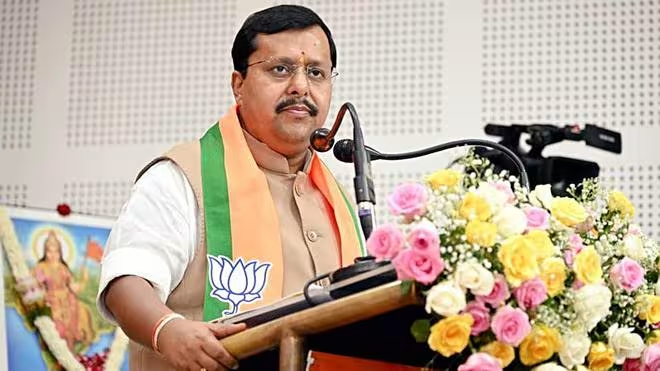
India’s economy continued to display impressive strength during the 2025-26 financial year, delivering robust growth despite persistent uncertainties in the global economic landscape. According to BJP president Nitin Nabin, the country’s economic performance under Prime Minister Narendra Modi’s leadership reflects resilience, stability and broad-based expansion across key sectors. India recorded a GDP growth rate of 7.7% for FY 2025-26, while growth accelerated to 7.8% in the fourth quarter, signaling sustained economic momentum. The strong performance is expected to support investment activity, generate employment opportunities for young people and improve living standards, reinforcing the government’s long-term vision of transforming India into a developed nation by 2047.
India’s Growth Engine Powers Ahead as Economy Maintains Strong Momentum
India’s economic trajectory remained firmly on an upward path during the 2025-26 financial year, underscoring the country’s ability to navigate a challenging global environment while sustaining high growth rates. Political leaders and policymakers have pointed to the latest economic data as evidence of the nation’s growing resilience and expanding productive capacity.
Bharatiya Janata Party (BJP) president Nitin Nabin on Friday emphasized that India’s economy continues to perform strongly under the leadership of Prime Minister Narendra Modi, despite ongoing geopolitical tensions, fluctuating global demand and uncertainty across major international markets.
Strong GDP Performance Signals Economic Resilience
India registered a GDP growth rate of 7.7% during FY 2025-26, reflecting continued expansion across multiple sectors of the economy. The momentum strengthened further during the final quarter of the fiscal year, with growth reaching 7.8%, indicating that economic activity remained robust through the year’s closing months.
The figures suggest that domestic demand, investment activity and industrial output have collectively contributed to sustaining growth at a pace that places India among the fastest-growing major economies in the world.
Economic analysts often view strong quarterly growth as an indicator of underlying economic health, particularly when expansion is supported by diverse sectors rather than isolated industries. The latest numbers appear to reflect such broad-based participation across the economy.
Investment Climate Gains Further Strength
The sustained growth momentum is expected to reinforce investor confidence and support continued capital formation. A stable and expanding economy typically creates favorable conditions for both domestic and foreign investments, encouraging businesses to expand operations, increase production capacity and pursue new opportunities.
As investment flows strengthen, the broader economy can benefit through infrastructure development, technological advancement and increased business activity. These factors often contribute to productivity gains and long-term economic competitiveness.
The latest GDP data is likely to be viewed positively by market participants seeking evidence of economic stability amid ongoing global volatility.
Expanding Opportunities for India’s Youth
A growing economy plays a critical role in creating employment opportunities, particularly for India’s large and increasingly skilled workforce. Strong economic expansion often translates into greater demand for labor across industries, including manufacturing, services, technology and infrastructure.
According to Nabin, the current growth momentum is helping generate opportunities for young Indians while supporting broader economic inclusion. Employment generation remains a central component of the country’s development strategy as policymakers seek to harness the demographic advantages of a youthful population.
The continued expansion of economic activity could provide additional avenues for entrepreneurship, skill development and workforce participation in the years ahead.
Improving Quality of Life Through Economic Growth
Beyond investment and employment, sustained economic growth can have a direct impact on citizens’ daily lives. Rising incomes, improved infrastructure, expanded public services and enhanced access to opportunities are often associated with long-term economic progress.
Government leaders have argued that the current pace of growth is contributing to improved ease of living for citizens, while strengthening the foundations for future prosperity.
The emphasis on inclusive development reflects a broader policy objective of ensuring that economic gains translate into tangible benefits across regions and socioeconomic groups.
Vision Viksit Bharat 2047 Remains Central
The latest economic performance is being viewed within the context of the government’s long-term development agenda, commonly referred to as the vision of Viksit Bharat 2047. The initiative aims to transform India into a developed nation by the centenary year of its independence.
Supporters of the government’s economic strategy argue that sustained growth rates, rising investment and expanding economic opportunities are critical building blocks toward achieving that objective.
With India continuing to post strong economic numbers despite a complex global backdrop, policymakers see the latest GDP figures as a positive signal that the country remains on course toward its ambitious long-term development goals.
Comments