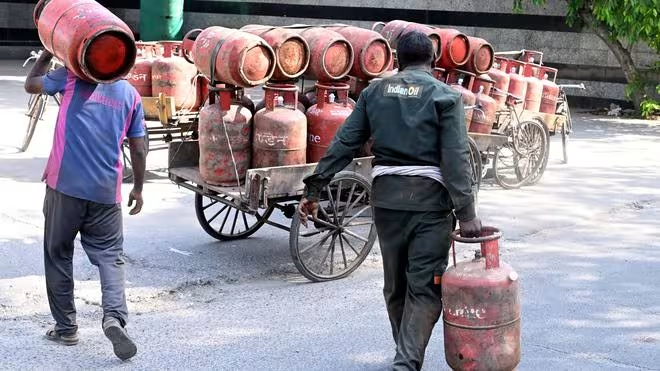
India has increased domestic LPG prices by Rs. 29 per cylinder as rising international energy costs continue to exert pressure on fuel markets following disruptions in West Asia. Despite the revision, government officials maintain that Indian consumers continue to benefit from some of the most affordable cooking gas prices globally. The country has also managed to secure uninterrupted energy supplies during recent geopolitical tensions, preventing shortages of LPG and other petroleum products. Meanwhile, targeted subsidies under the Pradhan Mantri Ujjwala Yojana (PMUY) remain in place to protect economically vulnerable households from rising costs, highlighting the government's dual strategy of market alignment and social welfare support.
India Adjusts LPG Prices While Preserving Energy Security and Consumer Support
India has revised domestic cooking gas prices upward in response to rising international liquefied petroleum gas (LPG) costs, reflecting the growing impact of geopolitical developments on global energy markets. The latest increase comes as governments worldwide continue to grapple with the economic consequences of supply chain disruptions and elevated energy prices.
The price of a standard 14.2-kg domestic LPG cylinder in Delhi has been raised to Rs. 942 from Rs. 913, representing an increase of Rs. 29 per cylinder. The adjustment follows a sharp rise in international LPG benchmark prices triggered by supply concerns and market volatility linked to developments in West Asia.
Despite the increase, officials argue that Indian households remain among the least burdened globally when compared with consumers in many other major economies.
Global Energy Volatility Drives Domestic Price Revision
The latest pricing adjustment underscores the extent to which domestic energy markets remain connected to international commodity trends. LPG prices are influenced by global supply-demand dynamics, shipping costs and geopolitical developments that affect major energy-producing regions.
Recent disruptions in West Asia contributed to upward pressure on international LPG prices, forcing governments and energy companies worldwide to reassess pricing structures. For India, which remains a significant importer of energy resources, fluctuations in global markets inevitably influence domestic fuel economics.
Industry analysts note that balancing consumer affordability with the financial sustainability of fuel distribution systems remains one of the most complex policy challenges facing governments.
Energy Security Efforts Prevent Supply Disruptions
One of the most significant developments during the recent period of geopolitical uncertainty has been India's ability to maintain uninterrupted energy supplies.
Government officials stated that the country successfully ensured the continued movement of energy shipments through the strategically important Strait of Hormuz despite regional tensions. As a result, India avoided shortages of LPG and other petroleum products that could have disrupted households, transportation networks and industrial operations.
The achievement highlights the importance of diversified procurement strategies, diplomatic engagement and robust supply-chain management in safeguarding national energy security.
For an economy heavily dependent on imported energy resources, uninterrupted access to fuel supplies remains critical for economic stability and inflation management.
Subsidy Support Continues for Vulnerable Households
While market-linked price adjustments have increased the cost of LPG cylinders for general consumers, targeted support measures remain in place for lower-income households.
Beneficiaries under the Pradhan Mantri Ujjwala Yojana (PMUY) will continue to receive a subsidy of Rs. 300 per cylinder on eligible refills. As a result, eligible households will effectively pay Rs. 642 per cylinder despite the latest price revision.
The government has, however, modified the structure of subsidized refills. Eligible consumers will now receive the subsidy on the first four refills annually, compared with the previous arrangement that covered up to nine refills.
Policymakers argue that the revised framework continues to provide meaningful support while improving the efficiency of subsidy allocation.
Balancing Fiscal Responsibility and Consumer Welfare
The LPG pricing decision reflects a broader policy balancing act between protecting consumers and maintaining fiscal discipline.
Subsidies play an important role in shielding vulnerable populations from inflationary pressures, but they also create financial obligations for the government. As international energy prices fluctuate, policymakers must weigh the need for affordability against the long-term sustainability of public expenditure.
Economists suggest that targeted subsidies are increasingly favored over universal support programs because they allow governments to concentrate resources on households most affected by rising living costs.
Looking Ahead
India's LPG pricing strategy is likely to remain closely tied to developments in global energy markets. Continued volatility in crude oil and LPG benchmarks could influence future pricing decisions, while geopolitical events will remain a key factor affecting supply chains.
At the same time, the government's ability to maintain uninterrupted fuel supplies during periods of international uncertainty has reinforced confidence in the country's energy management capabilities.
As policymakers seek to balance affordability, fiscal responsibility and energy security, the latest LPG price revision serves as a reminder that global energy dynamics continue to shape household economics across one of the world's fastest-growing major economies.
Comments