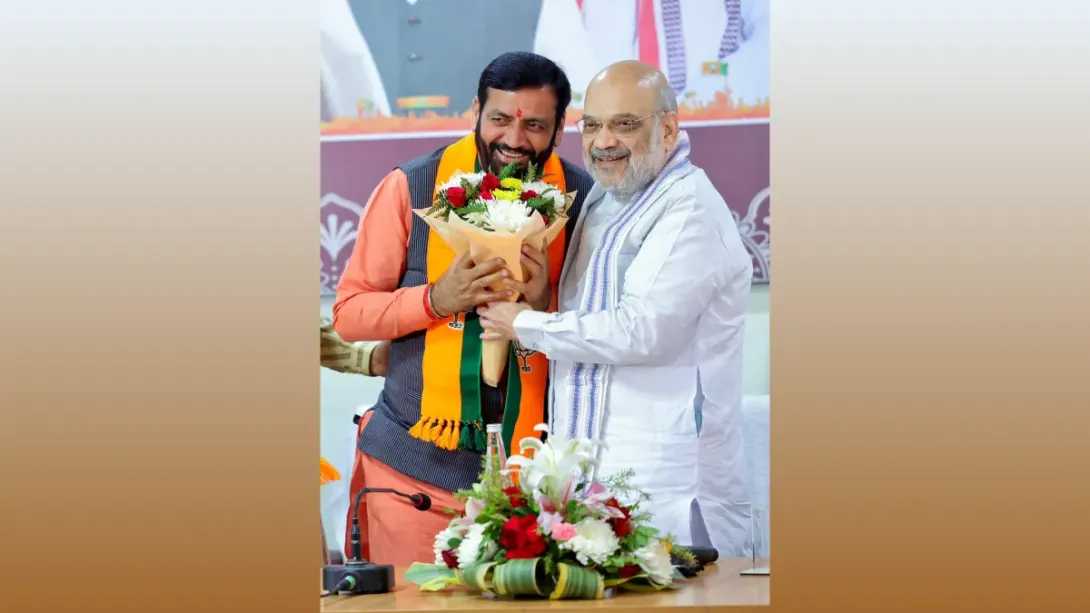
The government of Haryana has initiated a time-bound strategy to accelerate the implementation of its 2026–27 budget, directing all departments to translate policy announcements into actionable plans within one month. Under the leadership of Chief Minister Nayab Singh Saini, the state is emphasizing grassroots engagement through Gram Sabha consultations and prioritizing agricultural resilience, horticulture development, and farmer producer organizations (FPOs). Existing schemes, including crop insurance and price support mechanisms, are being reinforced. The approach signals a shift toward execution-driven governance, aiming to enhance rural incomes, strengthen policy accountability, and improve economic outcomes.
A Time-Bound Governance Framework
In a decisive administrative move, the Haryana government has mandated that all departments finalize execution strategies for budget announcements within a strict one-month timeline following the presentation of the 2026–27 fiscal plan.
Chief Minister Nayab Singh Saini, while reviewing departmental preparedness, underscored the importance of timely implementation. The directive reflects a broader governance philosophy centered on minimizing delays between policy formulation and on-ground execution—an issue that has historically constrained the effectiveness of public spending.
This approach aligns with emerging trends in public administration, where outcomes and measurable impact increasingly define policy success rather than announcements alone.
Decentralization Through Gram Sabha Engagement
A distinguishing feature of the state’s strategy is its emphasis on decentralized governance. Departments have been instructed to take budget announcements directly to the grassroots level through Gram Sabha meetings.
These village-level assemblies will serve as platforms for discussion, feedback, and formal resolution-making. The outcomes of these meetings will then be reported back to the Chief Minister’s Office, creating a feedback loop that integrates local perspectives into policy execution.
Such a participatory model is expected to enhance transparency and ensure that development initiatives are aligned with the actual needs of rural communities. It also introduces an element of accountability, as local stakeholders become active participants in monitoring implementation.
Agriculture and Rural Economy at the Core
The budget execution strategy places a strong emphasis on agriculture, horticulture, and farmer producer organizations (FPOs), reflecting the centrality of the rural economy to Haryana’s growth trajectory.
Existing schemes such as the Bhavantar Bharpai Yojana, which compensates farmers for price fluctuations, and the Chief Minister Horticulture Insurance Scheme are being reinforced. The latter provides coverage for 46 types of crops, with farmers contributing a modest premium of 2.5 per cent, while the state government absorbs the remaining cost.
These initiatives are designed to mitigate risks associated with market volatility and climate uncertainty, thereby stabilizing farm incomes and encouraging diversification into high-value crops.
Strengthening Institutional Support for Farmers
In addition to direct financial support, the government is focusing on strengthening institutional frameworks that support farmers. Farmer Producer Organizations (FPOs) are expected to play a pivotal role in improving market access, enhancing bargaining power, and facilitating the adoption of modern agricultural practices.
By integrating FPOs into the budget execution framework, the state aims to create a more organized and resilient agricultural ecosystem. This approach not only benefits individual farmers but also contributes to the overall efficiency and competitiveness of the sector.
Administrative Efficiency and Policy Accountability
The directive to implement budget announcements within a defined timeframe represents a shift toward performance-oriented governance. Departments will be required to develop detailed action plans, set milestones, and monitor progress closely.
This focus on administrative efficiency is expected to improve the utilization of public funds and reduce the risk of project delays. It also enhances policy accountability, as departments will be evaluated based on their ability to deliver tangible outcomes.
From a financial perspective, timely execution can lead to better fiscal management by ensuring that allocated resources are deployed effectively within the fiscal year.
Economic Implications and Forward Outlook
The accelerated implementation of budget initiatives is likely to have positive ripple effects across the state’s economy. Increased agricultural productivity, improved rural incomes, and enhanced infrastructure can stimulate demand and drive economic growth.
Moreover, the emphasis on horticulture and diversification could open new avenues for export-oriented growth, particularly in high-value agricultural products.
However, the success of this strategy will depend on sustained coordination between departments, effective monitoring mechanisms, and the ability to address implementation challenges in real time.
Conclusion: From Policy to Performance
The Haryana government’s directive to fast-track budget implementation marks a significant evolution in its governance approach. By combining time-bound execution with grassroots participation and sectoral prioritization, the state is positioning itself to achieve more impactful and inclusive development outcomes.
As the 2026–27 fiscal year unfolds, the effectiveness of this strategy will be closely watched as a potential model for other states seeking to bridge the gap between policy intent and real-world impact.
Comments