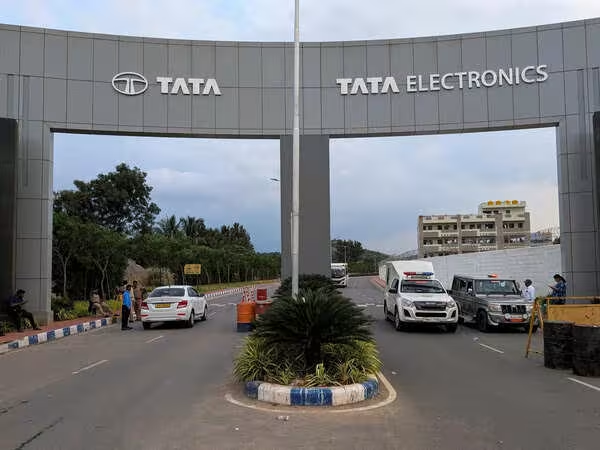
India's ambitions to become a global manufacturing hub for Apple have encountered a fresh challenge after pollution regulators accused a Tata Electronics facility in Tamil Nadu of contaminating groundwater near agricultural land. The development places one of Apple's most important Indian suppliers under regulatory pressure at a time when the company is rapidly expanding iPhone production outside China. While Tata Electronics maintains that it complies with all environmental regulations, authorities have warned that the factory could face power disconnection and closure if a satisfactory explanation is not provided. The dispute highlights the growing environmental and compliance risks accompanying India's manufacturing boom.
According to a notice issued by the Tamil Nadu Pollution Control Board (TNPCB), a Tata Electronics plant in Hosur allegedly discharged wastewater into a rainwater harvesting pond within its premises. State inspections conducted between December 2025 and May 2026 reportedly found that the pond overflowed, leading to contamination of groundwater sources and open wells used by nearby farmers.
The investigation followed complaints from local landowners who claimed that wastewater from the facility had been affecting agricultural land and water resources for several months. Regulators stated that despite previous instructions issued in December 2025, Tata had failed to implement corrective measures to address the concerns.
The Hosur facility plays a critical role in Apple's supply chain. The plant manufactures iPhone back panels and other key components and has become an important pillar of Apple's strategy to diversify production away from China. Tata Electronics has emerged as Apple's second-largest manufacturing partner in South Asia, behind Taiwan-based supplier Foxconn.
In response to the allegations, Tata Electronics said an independent assessment conducted by an accredited laboratory concluded that the company remains fully compliant with regulatory requirements. The company emphasized its commitment to responsible environmental practices and stated that it had responded to the concerns raised by authorities, though it did not disclose details of its submission.
The pollution control board's warning carries significant implications. Regulators have asked Tata to explain why electricity supply to the facility should not be suspended and why the plant should not be shut down for alleged violations of environmental regulations. Such action could potentially disrupt production at a facility that is strategically important to both Tata and Apple.
The controversy adds to a series of operational setbacks involving Apple's manufacturing network in India. In September 2024, a fire temporarily halted production at the same Hosur facility. Earlier, a fire at an iPhone manufacturing plant operated by former Apple supplier Pegatron disrupted operations for several days. Additionally, reports concerning labor practices at supplier facilities have previously drawn international attention.
Environmental compliance remains a recurring challenge across India's industrial sector. Government data presented to Parliament earlier this year indicated that thousands of industrial facilities have faced regulatory action over environmental violations during the past five years, with several thousand operations ultimately shut down by pollution authorities.
The timing is particularly sensitive given India's growing importance in Apple's global manufacturing strategy. Research firm Counterpoint Research projects that India could account for approximately 26% of worldwide iPhone production in 2026, a dramatic increase from just 6% four years earlier. The rapid expansion reflects both Apple's efforts to reduce dependence on China and India's push to attract high-value electronics manufacturing.
For investors and industry observers, the case underscores a broader reality: as India scales up its role in global supply chains, environmental compliance, labor standards, and operational resilience are becoming increasingly critical factors alongside manufacturing capacity. The outcome of the investigation could serve as an important test of how regulators balance industrial growth with environmental protection in one of the world's fastest-growing manufacturing destinations.
Comments