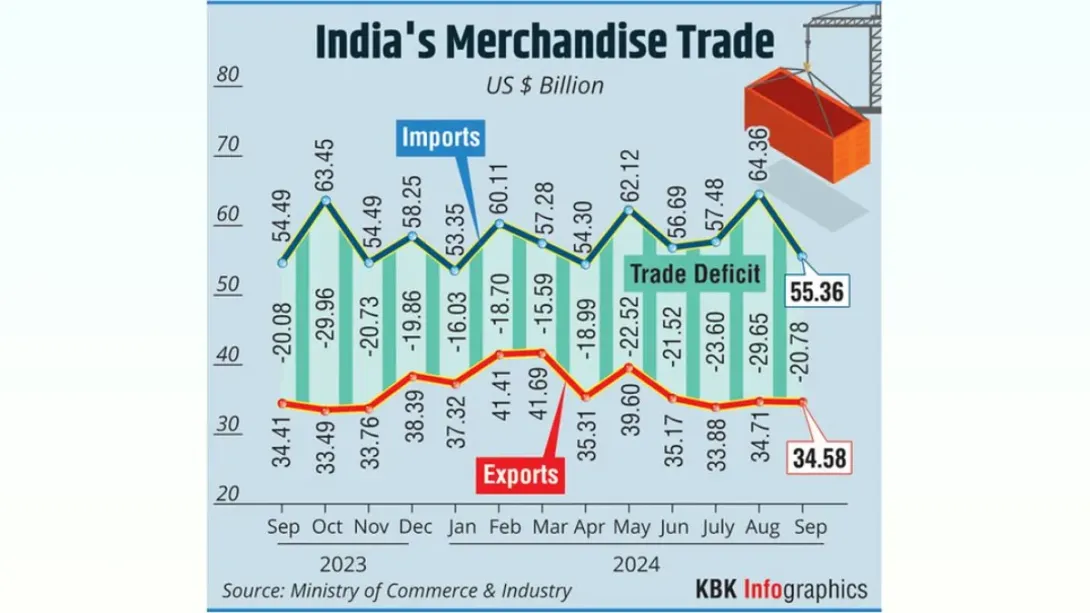
China has emerged as India’s largest trading partner in FY26, overtaking the United States after four consecutive years of American dominance. Bilateral trade between India and China reached Rs. 12.5 lakh crore (USD 151.1 billion), driven by strong import growth and a notable rise in exports. However, the surge has been accompanied by a widening trade deficit, which expanded to a record Rs. 9.3 lakh crore (USD 112.16 billion). The shift underscores deepening economic interdependence while raising strategic concerns over trade imbalances and supply chain dependencies.
China Overtakes the United States
In a significant shift in global trade dynamics, China has surpassed the United States to become India’s largest trading partner in FY26. This marks a reversal after four years during which the US held the top position.
The resurgence of China as India’s primary trade partner highlights the enduring strength of bilateral trade ties, despite geopolitical tensions and ongoing efforts to diversify supply chains.
Bilateral Trade Reaches Record Levels
Total trade between India and China climbed to Rs. 12.5 lakh crore (USD 151.1 billion), reflecting robust commercial engagement across sectors. The increase was fueled by growth in both exports and imports, although the latter continued to dominate.
India’s exports to China rose sharply by 36.66 percent to Rs. 1.6 lakh crore (USD 19.47 billion), indicating improved market access and demand for select Indian goods. Meanwhile, imports from China expanded by 16 percent to Rs. 10.9 lakh crore (USD 131.63 billion), driven by demand for electronics, machinery, and industrial inputs.
Trade Deficit Hits Record High
While trade volumes have surged, the imbalance in bilateral trade has widened significantly. India’s trade deficit with China reached an all-time high of Rs. 9.3 lakh crore (USD 112.16 billion), up from Rs. 8.2 lakh crore (USD 99.2 billion) in the previous fiscal year.
The persistent deficit underscores India’s heavy reliance on Chinese imports, particularly in critical sectors such as electronics, pharmaceuticals, and manufacturing components. This imbalance remains a key concern for policymakers.
Drivers of Import Dependence
The rise in imports from China reflects structural factors within India’s economy. Chinese manufacturers continue to offer cost advantages, scale efficiencies, and integrated supply chains that are difficult to replicate domestically in the short term.
For Indian industries, especially those in manufacturing and infrastructure, imports from China remain essential for maintaining production continuity and competitiveness.
Strategic and Economic Implications
The widening trade deficit raises important strategic questions about economic resilience and supply chain security. While increased trade signifies strong economic ties, excessive dependence on a single partner can expose vulnerabilities.
India has been actively pursuing initiatives to boost domestic manufacturing and diversify import sources. However, the latest data suggests that achieving these objectives will require sustained policy efforts and long-term investment.
Outlook: Balancing Growth and Resilience
Looking ahead, India faces the dual challenge of maintaining strong trade growth while addressing structural imbalances. Expanding exports to China, particularly in high-value sectors, could help narrow the deficit.
At the same time, continued focus on domestic production capabilities, innovation, and alternative trade partnerships will be critical for reducing dependency and enhancing economic resilience.
Conclusion
China’s return as India’s largest trading partner reflects the scale and complexity of bilateral economic ties. While the growth in trade is a positive indicator of economic engagement, the widening deficit highlights underlying structural challenges.
For India, the path forward lies in balancing trade expansion with strategic autonomy—ensuring that economic growth is not only robust but also sustainable and resilient in an increasingly interconnected global economy.
Comments