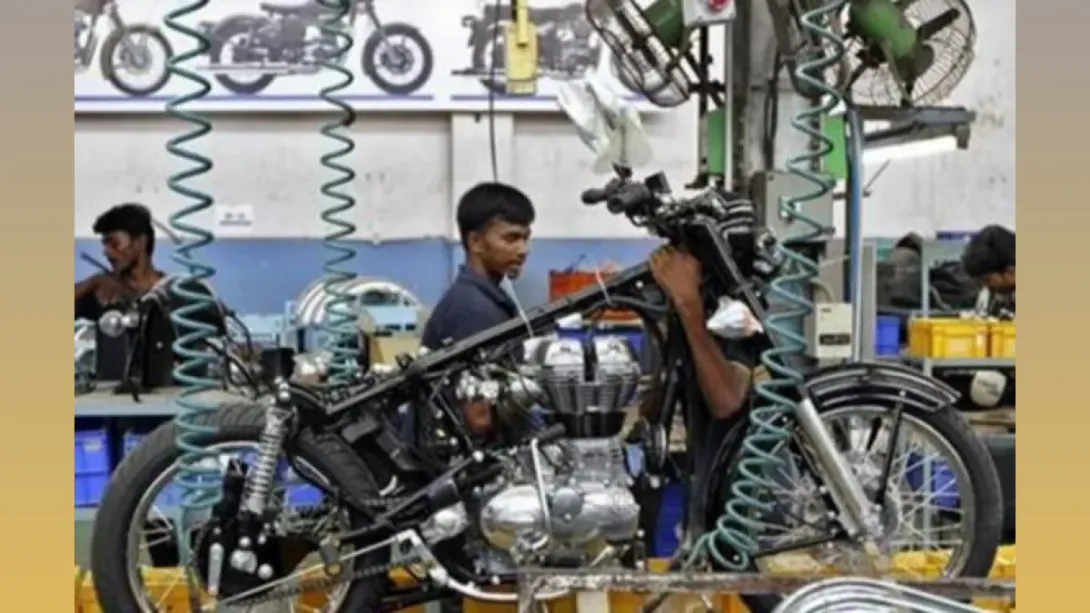
Royal Enfield reported a 31 percent year-on-year increase in total sales for April 2026, reaching 1,13,164 units, reflecting strong domestic demand despite a decline in exports. The mid-size motorcycle maker, part of Eicher Motors, saw domestic sales rise sharply by 37 percent, while overseas shipments fell by 14 percent. The performance underscores a resilient home market and highlights shifting demand dynamics across geographies. As the company navigates global headwinds, its domestic growth trajectory continues to anchor overall performance and reinforce its leadership in the premium motorcycle segment.
Sales Performance: Strong Year-on-Year Growth
Royal Enfield delivered a robust performance in April 2026, with total sales rising to 1,13,164 units from 86,559 units in the same month last year. The 31 percent growth reflects sustained demand and effective market positioning.
This performance signals continued recovery in the two-wheeler segment, particularly within the mid-size motorcycle category, where Royal Enfield maintains a dominant presence.
Domestic Market Strength: Driving the Growth Engine
The company’s domestic sales stood at 1,04,129 units, marking a significant increase from 76,002 units in April 2025—a 37 percent rise.
This surge highlights strong consumer demand within India, supported by improving economic conditions and a growing preference for premium motorcycles. The domestic market continues to serve as the primary revenue driver, offsetting volatility in international markets.
Export Performance: Navigating Global Headwinds
Despite strong domestic momentum, exports declined by 14 percent to 9,035 units, compared to 10,557 units in the year-ago period.
The drop reflects broader global challenges, including fluctuating demand, currency volatility, and regional economic uncertainties. For Royal Enfield, this underscores the importance of diversifying export markets and strengthening international distribution strategies.
Strategic Positioning: Balancing Domestic and Global Markets
Royal Enfield’s performance illustrates a dual-market strategy, where domestic growth compensates for international fluctuations. By focusing on core markets while gradually expanding its global footprint, the company aims to maintain stability and long-term growth.
Its brand positioning in the mid-size motorcycle segment continues to differentiate it from competitors, enabling consistent demand across customer segments.
Financial Implications: Sustaining Growth Momentum
The company’s strong domestic sales growth is likely to support revenue expansion and improve operating leverage. Increased volumes can enhance profitability, particularly when supported by efficient cost management.
At the same time, the decline in exports may exert pressure on margins, highlighting the need for balanced revenue streams. The two-wheeler sector’s contribution to the economy, often measured in thousands of crores (Rs.), remains significant.
Industry Context: Evolving Consumer Preferences
The growth in domestic sales reflects a broader shift in consumer preferences toward premium and lifestyle-oriented motorcycles. Royal Enfield has successfully capitalized on this trend, offering products that combine heritage branding with modern features.
As competition intensifies, maintaining product innovation and customer engagement will be critical to sustaining market leadership.
Conclusion: Resilient Growth Amid Market Divergence
Royal Enfield’s April 2026 performance highlights a resilient growth trajectory driven by strong domestic demand. While export challenges persist, the company’s ability to offset these pressures underscores the strength of its core market.
Looking ahead, balancing domestic expansion with global market recovery will be key to sustaining long-term growth. In a dynamic automotive landscape, Royal Enfield’s strategic adaptability positions it well for continued success.
Comments