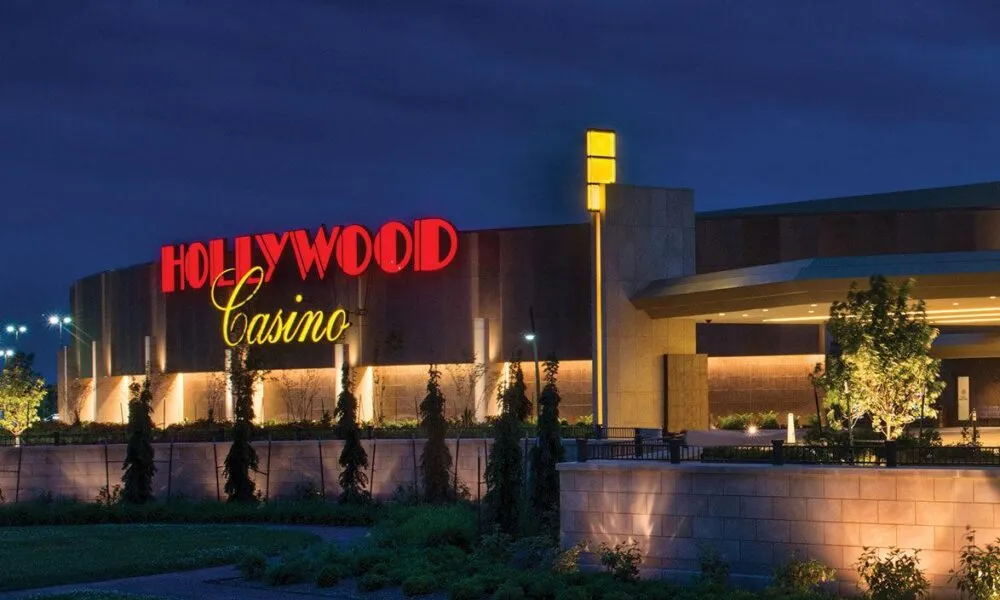
Casino operators across the U.S. state of Kansas reported robust financial performance in February, with total gaming revenue reaching approximately Rs. 294 crore (converted from $35.5 million), reflecting a year-over-year increase of 21.2%. Data released by the Kansas Racing and Gaming Commission highlights strong growth across both slot machines and table games. While leading properties such as Hollywood Casino at Kansas Speedway and Kansas Star Casino posted solid gains, mixed performance across other venues underscores shifting consumer trends within the state’s competitive gaming market.
Statewide Revenue Growth Signals Strong Demand
The casino sector in Kansas delivered a strong performance in February, generating approximately Rs. 294 crore in total gaming revenue. This marks a 21.2% increase compared to the same period last year, indicating resilient consumer demand and steady market recovery.
The figures, published by the Kansas Racing and Gaming Commission, suggest that both casual and high-value players contributed to the growth, supported by stable economic conditions and sustained interest in gaming entertainment.
Slot Machines Continue to Dominate Revenue Mix
Slot machines remained the primary revenue driver, contributing approximately Rs. 259 crore (from $31.3 million), reflecting a 7.5% year-over-year increase.
Table games, although representing a smaller share, recorded faster growth, rising 19.8% to approximately Rs. 35 crore (from $4.2 million). This trend indicates a gradual shift toward more diverse gaming preferences among players, as casinos continue to expand their table game offerings.
Leading Casinos Drive Market Performance
Among individual operators, Hollywood Casino at Kansas Speedway reported the highest revenue for the month, generating approximately Rs. 122 crore (from $14.7 million), up 11% year-over-year. Growth was supported by both slots and table games, which increased 10.9% and 11.5%, respectively.
Meanwhile, Kansas Star Casino recorded the strongest growth rate, with revenue rising 11.6% to approximately Rs. 115 crore (from $13.9 million). Notably, its table games segment surged 33.8%, highlighting increased player engagement in higher-margin gaming categories.
Mixed Performance Across Smaller Properties
Performance across smaller casinos presented a more varied picture. Boot Hill Casino posted modest growth, with revenue increasing 2.2% to approximately Rs. 28 crore (from $3.4 million). Slot revenue saw a slight uptick, while table games remained largely stable.
In contrast, Kansas Crossing Casino was the only operator to report a decline, with revenue falling 2.1% to approximately Rs. 30 crore (from $3.6 million). While table games revenue rose 6.1%, a 3.1% drop in slot performance weighed on overall results.
Market Trends and Competitive Dynamics
The February data reveals a competitive and evolving gaming landscape in Kansas. Larger casinos continue to benefit from scale, brand recognition, and diversified offerings, while smaller operators face challenges in maintaining consistent growth.
The faster expansion of table games suggests a shift in player preferences toward more interactive gaming experiences. At the same time, slots remain a stable and reliable revenue base, underscoring their continued importance to casino operators.
Outlook for the Kansas Gaming Sector
Looking ahead, the strong year-over-year growth indicates positive momentum for Kansas’ gaming industry. Continued investment in customer experience, game variety, and operational efficiency will likely shape future performance.
However, sustaining growth may depend on broader economic conditions and the ability of smaller operators to remain competitive. As consumer behavior evolves, casinos that effectively balance traditional offerings with innovative gaming experiences are expected to outperform.
Overall, February’s results reinforce the sector’s resilience and highlight its growing contribution to regional economic activity.
Comments