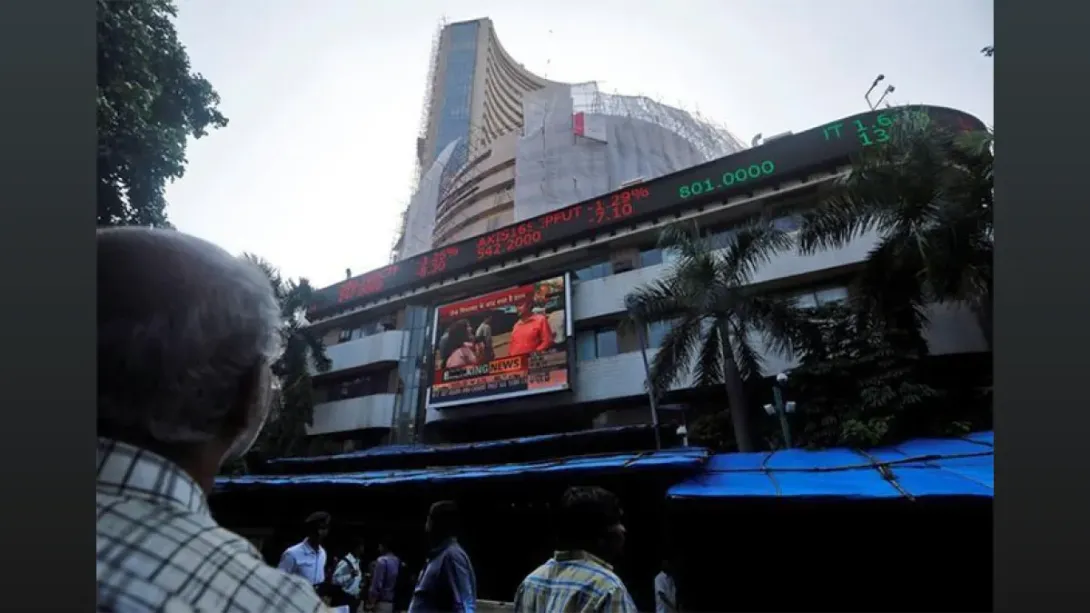
India’s equity benchmarks opened lower on Tuesday as geopolitical tensions in the Strait of Hormuz triggered risk aversion across global markets. The BSE Sensex fell 361.62 points to 76,907.78, while the NSE Nifty declined 134.90 points to 23,980.60 in early trade. Compounding investor concerns, the Indian rupee weakened to a historic low of Rs. 95.40 against the US dollar. Heavyweight stocks, including Larsen & Toubro and ICICI Bank, led the downturn, reflecting broad-based selling pressure.
Market Opens in the Red Amid Global Uncertainty
Indian equity markets mirrored global caution at the opening bell, with benchmark indices slipping as investors reacted to renewed geopolitical tensions in the Strait of Hormuz. The region, a critical artery for global oil shipments, has historically been a flashpoint for market volatility, particularly for energy-importing economies such as India.
The Sensex and Nifty both recorded notable declines in early trading, reflecting a shift toward risk-off sentiment. Market participants appeared to be recalibrating portfolios in anticipation of potential disruptions to crude oil supply chains, which could exert inflationary pressure and strain corporate margins.
Currency Weakness Amplifies Investor Anxiety
Adding to the bearish undertone was the sharp depreciation of the Indian rupee, which touched an all-time low of Rs. 95.40 against the US dollar. A weakening currency typically signals capital outflows and heightens concerns over imported inflation, particularly in sectors heavily reliant on foreign inputs.
From a financial standpoint, rupee depreciation increases the cost of crude oil imports, thereby widening the current account deficit and exerting pressure on fiscal balances. For equity markets, this translates into heightened volatility, as investors reassess earnings projections and macroeconomic stability.
Sectoral Pressure: Heavyweights Drag Indices Lower
The early decline was led by a broad-based sell-off across key sectors, with infrastructure, financial services, and pharmaceuticals bearing the brunt. Among the notable laggards were Larsen & Toubro, Bajaj Finance, Bajaj Finserv, ICICI Bank, Sun Pharma, and Maruti.
These companies, often considered bellwethers of India’s economic health, saw profit booking and cautious repositioning by institutional investors. Financial stocks, in particular, remain sensitive to currency fluctuations and interest rate expectations, while auto and infrastructure firms face potential cost pressures from rising input prices.
Geopolitics and Market Sensitivity: A Structural Link
The Strait of Hormuz remains one of the most strategically significant maritime corridors, facilitating a substantial share of global oil trade. Any escalation in tensions within this region tends to reverberate across financial markets, especially in emerging economies.
For India, which imports a majority of its crude oil requirements, such developments carry direct economic implications. Elevated oil prices can lead to inflationary spikes, prompting tighter monetary policies and dampening consumption—a chain reaction that ultimately impacts corporate earnings and equity valuations.
Investor Outlook: Navigating Volatility
Market analysts suggest that the current downturn may be driven more by external shocks than domestic fundamentals. India’s macroeconomic indicators, including GDP growth and corporate earnings outlook, remain relatively stable.
However, in the near term, investor sentiment is likely to remain cautious. Portfolio diversification, defensive sector allocation, and close monitoring of global developments are expected to guide investment strategies. Institutional flows, particularly from foreign investors, will also play a decisive role in shaping market direction.
Conclusion: A Test of Market Resilience
The early decline in India’s equity benchmarks underscores the interconnected nature of global finance, where geopolitical developments can swiftly influence domestic markets. While the fall in Sensex and Nifty reflects immediate concerns, it also highlights the market’s sensitivity to external shocks.
As investors navigate this phase of uncertainty, the focus will remain on macroeconomic stability, policy responses, and global risk factors. In a landscape defined by volatility, resilience and strategic foresight will determine how effectively markets absorb and recover from such disruptions—measured not just in index points, but in sustained investor confidence.
Comments