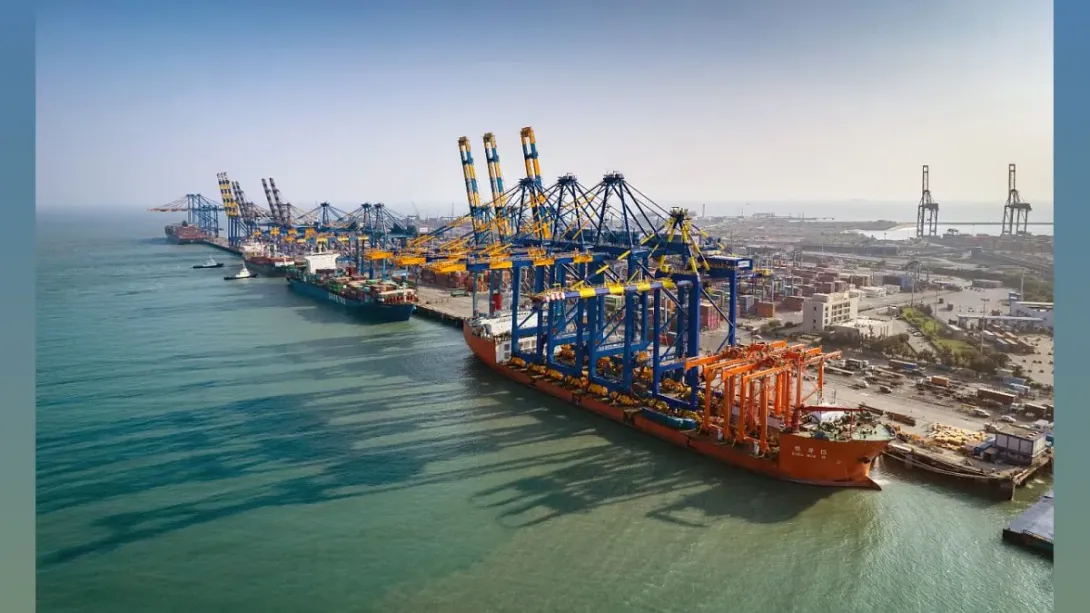
A promoter group entity of Adani Ports and Special Economic Zone has offloaded nearly 2 percent stake worth Rs 7,486 crore via open market transactions, marking a significant capital reallocation move. The shares were acquired by the US-based Capital Group, reinforcing foreign institutional interest in India’s infrastructure sector. The transaction, executed through block deals on the Bombay Stock Exchange, led to a marginal dip in APSEZ stock prices. The development reflects both liquidity optimization by promoters and sustained investor confidence in India’s long-term logistics and port-led growth story.
Promoter Stake Sale: Structure and Scale of the Transaction
In a notable market development, Worldwide Emerging Market Holding Ltd, a promoter group entity of Adani Ports and Special Economic Zone, divested approximately 1.99 percent stake in the company through a series of block deals. The transaction involved the sale of 4,58,58,705 shares, executed in three tranches.
The shares were sold at an average price of Rs 1,632.45 per share, resulting in a total deal value of Rs 7,486.20 crore. Such large-scale transactions are typically indicative of strategic portfolio adjustments rather than distress selling, particularly when conducted in an orderly manner through institutional channels.
Institutional Participation: Capital Group’s Strategic Bet
The stake sale saw participation from Capital Group, one of the world’s leading investment management firms, known for its long-term investment horizon and diversified global portfolio.
The acquisition underscores continued foreign institutional investor (FII) confidence in India’s infrastructure and logistics ecosystem. For Capital Group, the investment aligns with broader emerging market strategies that prioritize sectors with strong growth visibility, regulatory support, and scalable business models.
From a financial perspective, such inflows not only provide liquidity to the market but also enhance the credibility of the underlying asset, reinforcing investor sentiment.
Market Reaction: الأسهم Under Mild Pressure
Following the transaction, shares of Adani Ports and Special Economic Zone experienced a modest decline, slipping 1.10 percent to Rs 1,723.75 on the Bombay Stock Exchange during early Tuesday trade.
This price movement reflects a typical market response to block deals, where short-term supply pressure can lead to marginal corrections. However, such fluctuations are often transient, particularly when the underlying fundamentals of the company remain intact.
Market participants generally interpret promoter stake dilution in two ways: as a signal of profit-booking or as a strategic move to improve liquidity and broaden institutional ownership. In this case, the structured nature of the deal suggests the latter.
Strategic Implications: Liquidity and Ownership Diversification
The divestment aligns with a broader trend among promoter groups seeking to optimize capital allocation and enhance free float in publicly listed entities. Increasing institutional participation can lead to improved price discovery, reduced volatility, and stronger governance perceptions.
For Adani Ports, India’s largest private port operator, the transaction could contribute to a more diversified shareholder base, potentially attracting additional global investors. This, in turn, may support long-term valuation stability and access to capital markets.
From a corporate finance standpoint, such moves are often part of a calibrated strategy to balance promoter control with market liquidity—an essential consideration for large-cap companies operating in capital-intensive sectors.
Sector Outlook: Infrastructure as a Growth Engine
India’s port and logistics sector continues to benefit from structural tailwinds, including government-led infrastructure investments, rising trade volumes, and supply chain diversification. Companies like Adani Ports are strategically positioned to capitalize on these trends.
The participation of global investors like Capital Group further validates the sector’s growth potential, signaling confidence in India’s economic trajectory. As trade dynamics evolve, efficient port infrastructure will remain a critical enabler of economic expansion.
Conclusion: A Calculated Move in a Dynamic Market
The Rs 7,486 crore stake sale in Adani Ports and Special Economic Zone represents a calculated financial maneuver rather than a reactive decision. By facilitating increased institutional ownership, the transaction enhances market depth while allowing promoters to unlock value.
Although the immediate market reaction was subdued, the broader implications are constructive. The deal highlights the interplay between domestic corporate strategy and global capital flows, underscoring the maturity of India’s equity markets.
In an environment where capital efficiency and investor confidence are paramount, such transactions serve as a barometer of both corporate intent and market resilience—measured not just in share price movements, but in sustained institutional engagement.
Comments