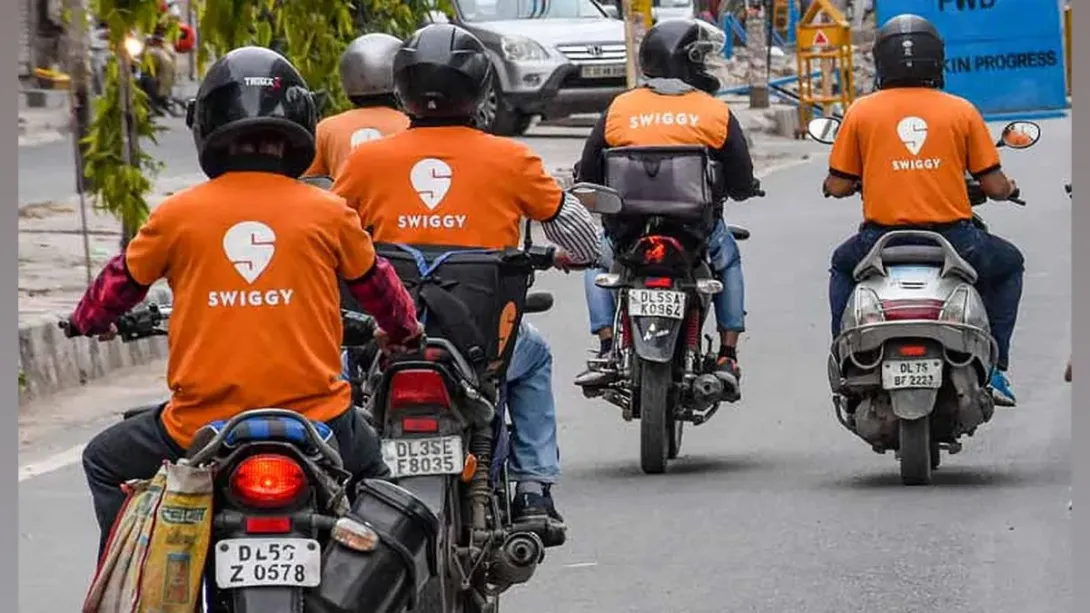
India’s food delivery sector is witnessing a gradual normalization in delivery timelines as gig workers return to metropolitan cities following state elections and the conclusion of the peak agricultural harvest season. Companies including Swiggy and magicpin say rider availability is improving significantly after a temporary workforce shortage disrupted operations across several urban markets. Industry executives believe the return of delivery personnel will stabilize logistics networks, reduce customer wait times, and improve platform efficiency in the coming weeks. The development highlights the deep interconnection between India’s informal labor economy, seasonal migration patterns, and the operational sustainability of the country’s rapidly expanding digital commerce ecosystem.
Gig Worker Return Begins Stabilizing Food Delivery Networks
India’s food delivery industry is beginning to recover from recent operational disruptions as a large number of gig workers return to major urban centers after participating in state elections and seasonal agricultural activities.
Executives from leading delivery platforms, including Swiggy and magicpin, said rider availability has improved considerably in recent weeks, resulting in faster delivery timelines and greater operational stability across metropolitan markets.
The temporary workforce shortage had affected delivery efficiency in several cities, increasing customer wait times and placing pressure on platform logistics systems.
According to Anshoo Sharma, Founder and CEO of magicpin, many delivery riders who had left metropolitan regions to vote during state elections or participate in peak harvest activities are now returning to cities, helping restore workforce balance across the sector.
The improvement is expected to continue gradually as migration patterns normalize.
Seasonal Migration Continues to Shape India’s Gig Economy
The situation underscores a defining characteristic of India’s gig economy: its deep dependence on migratory and semi-urban labor patterns.
A significant proportion of delivery personnel working for food-tech and quick-commerce platforms originate from smaller towns and rural regions. During election periods, harvest cycles, and major local festivals, many temporarily return to their hometowns, creating workforce shortages in large urban markets.
This seasonal migration directly affects delivery infrastructure, particularly during periods of high consumer demand.
Unlike traditional corporate sectors, platform-based logistics businesses remain highly sensitive to fluctuations in workforce mobility because operational efficiency depends on real-time rider availability.
The recent normalization in delivery timelines therefore reflects not merely improved logistics management but the gradual restoration of labor supply itself.
Food Delivery Platforms Face Workforce Dependence Challenges
The developments also reveal the structural vulnerabilities within India’s rapidly expanding digital delivery ecosystem.
Over the past decade, food delivery companies have built business models around flexible labor networks capable of scaling rapidly during demand spikes. However, the same flexibility can create instability during periods of large-scale workforce migration.
Temporary rider shortages affect multiple operational metrics simultaneously:
- Delivery times increase
- Customer satisfaction weakens
- Order fulfillment efficiency declines
- Incentive costs often rise
To maintain service levels during such periods, companies frequently offer higher payouts and surge incentives to active riders, increasing operational expenses.
The return of gig workers therefore carries significant financial and operational importance for platform businesses already operating in highly competitive environments.
Swiggy and magicpin Signal Gradual Operational Recovery
Industry executives appear cautiously optimistic that delivery systems will stabilize further over the coming weeks.
According to companies monitoring rider availability trends, workforce participation in urban markets is steadily improving, enabling platforms to reduce delivery delays that had emerged during recent labor shortages.
For food delivery businesses, delivery speed remains one of the most important competitive differentiators.
Customer expectations around convenience and rapid fulfillment have intensified sharply in recent years, particularly following the rise of quick-commerce platforms and ultra-fast delivery models.
As a result, even temporary delays can influence customer behavior and platform loyalty.
The normalization of delivery timelines is therefore likely to strengthen both operational performance and consumer confidence across the sector.
India’s Digital Commerce Boom Relies on Informal Labor
The current situation highlights a broader economic reality underpinning India’s digital-commerce expansion.
Much of the country’s platform economy — including food delivery, quick commerce, ride-hailing, and hyperlocal logistics — relies heavily on informal and semi-formal labor networks rather than traditional fixed-employment structures.
This model has enabled rapid scalability and lower operational costs. However, it also exposes companies to fluctuations linked to seasonal migration, regional events, and workforce mobility patterns.
Election cycles and agricultural seasons may appear disconnected from urban technology businesses on the surface, yet they exert substantial influence over delivery capacity and logistics efficiency.
The food delivery industry’s recent challenges therefore reflect the unique intersection between India’s digital economy and its traditional labor dynamics.
Delivery Speed Has Become a Core Competitive Metric
The restoration of rider availability arrives at a critical time for India’s online delivery ecosystem, where competition has increasingly shifted toward fulfillment efficiency and customer experience.
Companies are now competing not only on pricing and restaurant selection but also on delivery precision, speed, and reliability.
Faster delivery times improve customer retention, increase order frequency, and strengthen brand perception. Conversely, operational disruptions can quickly affect user engagement in a market where switching costs between apps remain low.
As competition intensifies across food-tech and quick-commerce platforms, workforce stability has become a strategic business priority rather than merely an operational concern.
The recent normalization trend may therefore provide temporary relief for companies navigating rising customer expectations and intense market rivalry.
Gig Workforce Stability Remains a Long-Term Industry Challenge
Despite current improvements, the episode raises broader questions about the sustainability of India’s gig-work model.
Platform companies continue facing ongoing debates surrounding worker retention, earnings stability, social protections, and long-term labor engagement. Seasonal migration patterns further complicate workforce planning and operational consistency.
As the sector matures, companies may increasingly explore strategies aimed at improving workforce stability through:
- Enhanced incentive structures
- Regional recruitment diversification
- Flexible scheduling models
- Better rider engagement systems
Balancing operational efficiency with workforce sustainability is likely to become one of the defining strategic challenges for India’s digital platform economy over the coming years.
Urban Consumption Economy Continues to Expand
Despite temporary disruptions, the broader outlook for India’s food delivery and hyperlocal commerce sectors remains robust.
Urban consumption growth, smartphone penetration, digital payments adoption, and changing lifestyle patterns continue supporting long-term expansion in online ordering behavior.
Demand for convenience-led services remains strong across metropolitan and emerging urban markets alike.
The recent delivery disruptions therefore appear more cyclical than structural, linked primarily to short-term workforce migration rather than weakening consumer demand.
With rider availability improving steadily, industry participants expect operational conditions to stabilize further in the near term.
A Reminder of India’s Complex Economic Interdependence
The normalization of delivery timelines offers an important reminder about the interconnected nature of India’s evolving economy.
Technology platforms, often viewed as symbols of modern digital infrastructure, remain deeply dependent on traditional labor migration cycles and regional socioeconomic patterns.
The return of gig workers to cities after elections and harvest season may seem like a routine operational development, yet it reflects a much larger economic reality: India’s digital growth story continues to be shaped as much by human mobility and informal labor networks as by algorithms and technology platforms.
For the food delivery industry, operational resilience will increasingly depend on understanding and adapting to that reality.
Comments