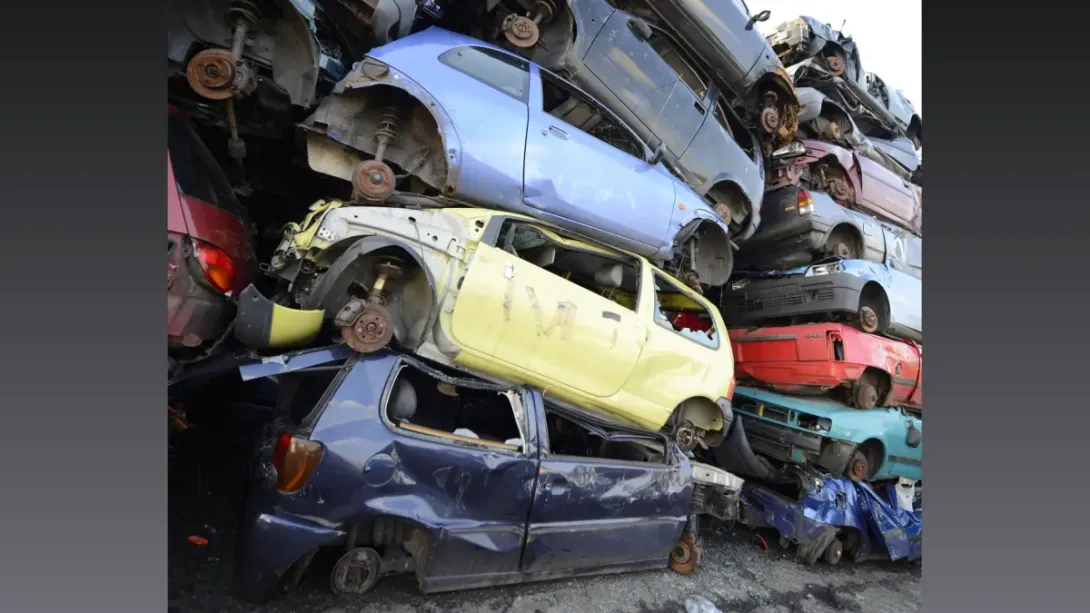
India’s automobile industry has fallen significantly short of its mandated vehicle scrappage obligations under the Environment Protection (End-of-Life Vehicle) Rules, 2025, achieving only around 30 percent of the required steel-equivalent recycling target during FY26. The regulations, introduced by the Ministry of Environment, Forest and Climate Change and implemented from April 1, 2025, were designed to strengthen sustainable mobility practices and formalize the vehicle recycling ecosystem. However, industry executives argue that the targets were unrealistic and operationally difficult to achieve within the current infrastructure framework. The shortfall has reignited debate over India’s transition toward circular manufacturing, environmental compliance, and the economic realities confronting the automotive sector.
Auto Sector Falls Short of Mandatory Scrappage Commitments
India’s automobile industry has failed to meet a substantial portion of its mandatory vehicle scrappage obligations under the country’s newly implemented end-of-life vehicle regulations.
According to industry estimates, automobile manufacturers achieved only around 30 percent of the steel-equivalent scrappage target mandated for FY26, leaving a compliance gap of nearly 70 percent.
The targets were introduced under the Environment Protection (End-of-Life Vehicle) Rules, 2025, notified by the Ministry of Environment, Forest and Climate Change in January last year and implemented from April 1, 2025.
The rules were designed to establish a structured framework for environmentally responsible disposal and recycling of ageing vehicles while supporting India’s broader sustainability and circular-economy objectives.
However, the first year of implementation has exposed major operational and structural challenges within the automotive ecosystem.
Industry Questions Practicality of Policy Targets
Executives across the automobile sector have criticized the scrappage framework, arguing that the mandated targets were overly ambitious and disconnected from on-ground realities.
Industry representatives contend that the existing vehicle recycling infrastructure, consumer participation levels, and regulatory coordination mechanisms remain insufficient to support compliance at the scale envisioned by policymakers.
Several executives described the policy structure as impractical, claiming it effectively rendered large sections of the industry technically non-compliant from the outset.
The criticism reflects growing tension between environmental policy ambitions and the operational capabilities of India’s manufacturing ecosystem.
Automobile manufacturers argue that while they broadly support sustainability goals, implementation timelines and compliance benchmarks must align more realistically with infrastructure readiness and market behavior.
End-of-Life Vehicle Rules Aim to Formalize Recycling Ecosystem
The Environment Protection (End-of-Life Vehicle) Rules, 2025, were introduced as part of India’s broader effort to modernize its vehicle recycling ecosystem and reduce environmental damage caused by ageing automobiles.
The policy framework seeks to:
- Encourage formal scrappage processes
- Increase material recycling efficiency
- Reduce pollution from old vehicles
- Improve resource recovery rates
- Strengthen circular manufacturing practices
The rules also aim to reduce dependence on virgin raw materials by improving recovery and reuse of metals such as steel, aluminum, and copper.
Globally, vehicle scrappage and recycling systems play a crucial role in sustainable industrial production, especially as automotive manufacturing becomes increasingly resource-intensive.
India’s policy was intended to accelerate similar structural transformation domestically.
Infrastructure Gaps Continue to Hinder Compliance
A major challenge confronting the industry is the limited scale and uneven distribution of authorized scrappage and recycling facilities across the country.
While the government has promoted the development of formal vehicle recycling centers, industry stakeholders argue that existing infrastructure remains inadequate for handling large-scale scrappage volumes.
Operational bottlenecks include:
- Insufficient recycling capacity
- Limited geographic coverage
- Weak supply-chain integration
- Low consumer participation
- Administrative complexities
The fragmented nature of India’s informal vehicle disposal ecosystem further complicates implementation.
Many older vehicles continue to be dismantled through unorganized channels rather than entering regulated recycling networks, reducing traceability and compliance visibility.
Consumer Participation Remains a Key Challenge
The success of any scrappage ecosystem ultimately depends on consumer participation, and industry executives say adoption rates remain lower than expected.
Vehicle owners often delay scrapping older vehicles due to:
- Financial considerations
- Emotional attachment
- Weak resale incentives
- Limited awareness about scrappage benefits
In several regions, aging vehicles continue operating despite regulatory discouragement because the economic cost of replacement remains high for many consumers.
Industry leaders argue that stronger financial incentives may be necessary to encourage voluntary participation in formal scrappage programs.
Without adequate consumer engagement, manufacturers face difficulty achieving recycling targets tied to end-of-life vehicle recovery.
Circular Economy Goals Face Operational Realities
The compliance shortfall illustrates the broader complexities involved in transitioning toward a circular industrial economy.
Governments globally are increasingly encouraging industries to reduce waste, improve recycling efficiency, and minimize environmental impact. However, implementation often requires extensive coordination across manufacturers, consumers, recyclers, regulators, and infrastructure providers.
India’s automotive sector is among the country’s largest manufacturing industries, contributing significantly to employment, exports, and industrial output.
Balancing environmental sustainability with industrial competitiveness therefore remains a delicate policy challenge.
The current situation highlights how ambitious environmental regulations can encounter friction when infrastructure development and stakeholder readiness lag behind policy objectives.
Steel Recovery Seen as Strategic Economic Objective
One of the major economic objectives behind the scrappage policy is improving domestic steel recovery and reducing dependence on primary raw material extraction.
Steel recovered from scrapped vehicles can play an important role in supporting resource efficiency and reducing energy-intensive production processes.
Globally, recycled steel is considered a critical component of sustainable industrial manufacturing because it lowers:
- Energy consumption
- Carbon emissions
- Raw material dependency
- Production costs over time
India’s push toward organized vehicle recycling is therefore linked not only to environmental goals but also to long-term industrial resource management.
However, the current compliance gap suggests that achieving these objectives may require a longer transition period than initially anticipated.
Environmental Compliance Pressure Intensifies for Automakers
The vehicle scrappage issue also reflects the broader regulatory pressure facing automobile manufacturers worldwide.
Automakers are simultaneously navigating multiple transitions involving:
- Electric mobility adoption
- Emission reduction mandates
- Sustainable manufacturing practices
- Recycling obligations
- Supply-chain decarbonization
These pressures are increasing operational complexity and capital expenditure requirements across the sector.
For Indian manufacturers already operating in highly competitive markets, adapting to evolving environmental compliance frameworks while maintaining affordability remains a major strategic challenge.
The scrappage shortfall could therefore intensify industry calls for phased implementation models and greater policy flexibility.
Government and Industry Likely to Reassess Framework
The large compliance gap may prompt further discussions between policymakers and industry stakeholders regarding potential adjustments to implementation mechanisms.
Possible areas of reconsideration could include:
- Revised compliance timelines
- Expanded scrappage incentives
- Infrastructure development support
- Improved consumer awareness initiatives
- Simplified regulatory procedures
Analysts believe collaboration between government and industry will be critical to ensuring that environmental objectives remain achievable without imposing disproportionate operational strain on manufacturers.
The long-term success of India’s vehicle recycling ecosystem will likely depend less on regulatory mandates alone and more on the creation of economically sustainable participation models.
India’s Green Mobility Transition Faces a Reality Check
The FY26 compliance shortfall serves as an important reminder that environmental transformation within large industrial economies is rarely linear.
India’s ambitions to build a sustainable and resource-efficient automotive ecosystem remain significant and strategically important. However, the gap between policy design and operational execution has become increasingly visible during the first year of implementation.
For the automobile sector, the challenge is no longer whether sustainability reforms are necessary, but how rapidly they can be integrated into existing industrial and consumer ecosystems without disrupting economic stability.
The coming years will likely determine whether India can successfully balance environmental accountability with the practical realities of industrial transition in one of the world’s largest automotive markets.
Comments