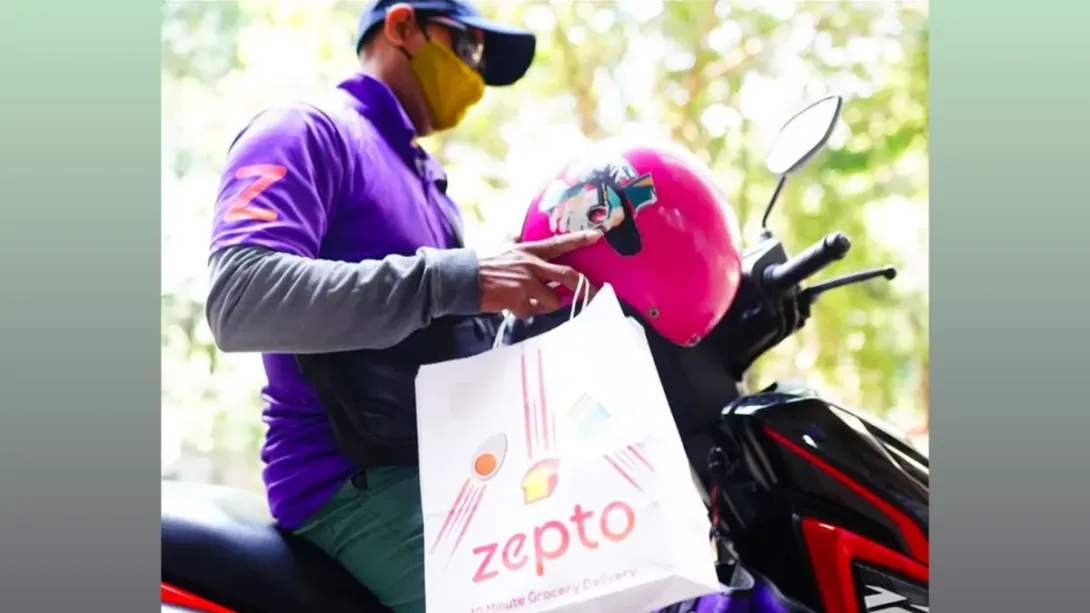
Zepto is preparing to launch an initial public offering valued at approximately Rs. 11,000 crore, marking one of the most closely watched startup listings in India’s rapidly expanding quick commerce sector. The Bengaluru-based company is reportedly aiming to enter public markets before the end of July after receiving regulatory approval earlier this month. Founded by young entrepreneurs Aadit Palicha and Kaivalya Vohra, Zepto’s planned listing underscores the growing investor appetite for hyperlocal delivery platforms despite intensifying competition, profitability concerns, and evolving market dynamics across India’s digital consumer economy.
Zepto Moves Toward Landmark Public Listing
India’s quick commerce industry is entering a new phase of financial maturity as Zepto prepares for a major stock market debut expected to value the offering at approximately Rs. 11,000 crore.
The proposed public issue is anticipated to become one of the most significant startup listings in India’s technology and consumer internet sector this year.
Sources familiar with the development indicate the company is targeting a market debut before July 31, positioning itself among a growing group of Indian consumer technology firms transitioning from venture capital-backed growth models to public market scrutiny.
The company has already received approval from the Securities and Exchange Board of India for its public issue process.
Quick Commerce Becomes India’s New Digital Battleground
Zepto’s IPO ambitions highlight the extraordinary rise of India’s quick commerce industry, where companies promise ultra-fast delivery of groceries and daily essentials within minutes.
The sector has emerged as one of the most competitive segments within India’s digital economy, attracting billions of rupees in investment amid rapidly changing urban consumer behavior.
Quick commerce platforms are competing aggressively through:
Faster delivery times
Dense warehouse networks
Discount-driven customer acquisition
Technology-based logistics optimization
Expansion into new product categories
Industry analysts believe the segment is fundamentally reshaping retail consumption patterns in major Indian cities.
Zepto Joins Growing List of Public Consumer Tech Firms
If the listing proceeds as planned, Zepto will join other major publicly traded Indian food delivery and quick commerce companies, including:
Zomato
Swiggy
The public market entry reflects how India’s startup ecosystem is gradually evolving beyond private funding cycles toward broader institutional and retail investor participation.
Public listings are increasingly viewed as important milestones for venture-backed technology firms seeking:
Long-term capital access
Greater financial transparency
Market credibility
Liquidity opportunities for investors
Confidential Filing Signals Competitive Sensitivity
Zepto reportedly filed its IPO documentation through the confidential filing route in December 2025.
The confidential pre-filing mechanism has become increasingly popular among startups because it allows companies to:
Delay public disclosure of financial details
Reduce competitive exposure
Maintain strategic flexibility
Refine offering structures before public scrutiny
The approach reflects growing sophistication within India’s startup financing ecosystem as technology firms adopt practices commonly used in mature global capital markets.
Founders Represent India’s New Entrepreneurial Generation
Zepto’s rise has also drawn attention because of its young founders, Aadit Palicha and Kaivalya Vohra, who left Stanford University to build the company.
Their entrepreneurial journey reflects the broader emergence of a new generation of Indian startup founders focused on:
Consumer technology
Logistics innovation
AI-driven commerce systems
Urban convenience platforms
The rapid growth of Zepto has positioned the founders among the most closely watched young entrepreneurs in India’s technology ecosystem.
Investor Interest Remains Strong Despite Profitability Concerns
The IPO comes at a time when investors continue debating the long-term economics of quick commerce businesses.
While the sector has experienced explosive growth, companies also face major financial challenges involving:
High delivery costs
Customer acquisition expenses
Warehouse infrastructure investment
Margin pressures
Intense price competition
Analysts remain divided on how quickly quick commerce firms can achieve sustainable profitability while maintaining rapid expansion.
However, strong investor interest suggests many market participants continue viewing the sector as a long-term structural growth opportunity tied to India’s expanding digital consumption economy.
India’s Consumer Internet Economy Continues Expanding
The rise of companies like Zepto reflects broader transformations occurring across India’s urban economy.
Key drivers include:
Increasing smartphone penetration
Digital payment adoption
Rising middle-class consumption
Changing lifestyle preferences
Demand for convenience-based services
India’s rapidly growing internet economy has created fertile ground for startups offering technology-driven consumer services.
Quick commerce, in particular, has benefited from younger urban consumers prioritizing speed, convenience, and app-based retail access.
Public Markets Becoming More Open to Tech Startups
India’s capital markets have become increasingly receptive to technology and internet-based companies in recent years.
The shift represents a major evolution from earlier periods when many startup firms struggled to convince public investors about long-term business viability.
Now, sectors such as:
E-commerce
Food delivery
Fintech
SaaS
Digital logistics
are attracting stronger institutional participation despite ongoing concerns surrounding valuation and profitability metrics.
Competitive Pressure Likely to Intensify
Zepto’s market debut may further intensify competition within India’s quick commerce landscape.
Companies across the sector continue racing to expand:
Dark store networks
Geographic coverage
Product offerings
AI-driven delivery optimization systems
At the same time, consolidation pressures may eventually emerge as firms seek scale efficiencies and sustainable operating margins.
Industry observers believe only a limited number of major players may ultimately dominate the sector over the long term.
The Future of Quick Commerce in India
The success of Zepto’s IPO could become an important indicator of investor sentiment toward India’s broader startup and consumer technology ecosystem.
A strong public market debut may encourage additional high-growth startups to pursue listings, further deepening India’s evolving technology capital markets.
More broadly, the company’s rise reflects how India’s digital economy is increasingly shifting toward hyper-convenience platforms designed around speed, personalization, and technology-enabled logistics infrastructure.
Ultimately, Zepto’s planned IPO symbolizes not only the growing maturity of India’s startup ecosystem, but also the larger transformation of consumer behavior, urban commerce, and digital retail economics in one of the world’s fastest-growing technology markets.
Comments