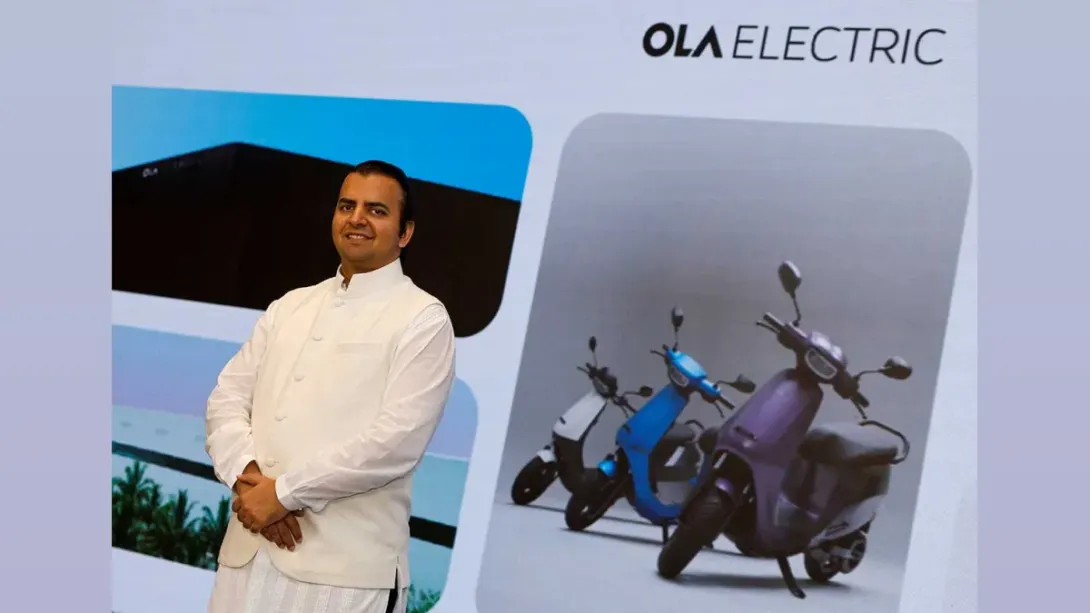
Ola Electric is reportedly in discussions with multiple domestic and international automobile manufacturers to supply lithium-ion battery cells and battery packs from its Krishnagiri gigafactory, signaling a strategic shift beyond its in-house electric scooter business. The Bengaluru-based company currently operates India’s only active gigafactory with an installed capacity of 6 GWh and has commercially deployed its proprietary 4680-format Bharat Cell at scale through its subsidiary Ola Cell Technologies. The expansion highlights India’s growing ambitions in advanced battery manufacturing and reflects intensifying competition within the global electric mobility supply chain ecosystem.
Ola Electric Expands Beyond Internal EV Demand
Ola Electric is accelerating its ambitions in battery manufacturing as it explores partnerships with automobile companies seeking localized energy storage solutions.
According to individuals familiar with the discussions, the company is currently engaged in talks with both Indian and international automakers to supply lithium-ion cells and battery packs produced at its Krishnagiri gigafactory in Tamil Nadu.
The move marks a significant strategic evolution for Ola Electric, which initially developed its battery infrastructure primarily to support its electric scooter operations. By targeting external customers, the company appears to be positioning itself as a broader energy technology and battery manufacturing enterprise rather than solely an electric vehicle producer.
Industry analysts view the development as an important milestone in India’s emerging battery manufacturing ecosystem.
Krishnagiri Gigafactory Becomes Strategic Asset
At the center of Ola Electric’s expansion strategy is its Krishnagiri gigafactory, currently described as India’s only operational gigafactory.
The facility presently operates with an installed production capacity of 6 gigawatt-hours (GWh), giving the company a substantial early-mover advantage in India’s rapidly developing battery manufacturing sector.
Gigafactories are considered strategically important infrastructure in the global electric mobility industry because battery production remains one of the most valuable and supply-sensitive components within the EV ecosystem.
As countries worldwide seek to reduce dependence on imported battery technologies and supply chains, domestic manufacturing capabilities are increasingly becoming a national industrial priority.
For India, large-scale battery production is viewed as critical to supporting the country’s long-term electric mobility and clean energy ambitions.
Bharat Cell Technology Signals Technological Ambition
Through its wholly-owned subsidiary Ola Cell Technologies, the company has also commercially deployed its proprietary 4680-format Bharat Cell technology.
The 4680 cylindrical cell format has attracted significant global attention due to its potential advantages in energy density, manufacturing efficiency, thermal performance, and overall battery economics.
Industry observers note that large-scale commercial deployment of this format remains highly complex from both engineering and manufacturing perspectives.
According to the company’s positioning, Ola Electric has become the only organization after Tesla, Inc. to commercially deploy the technology at scale.
The development highlights the company’s effort to establish technological credibility within the increasingly competitive global battery sector.
Battery Manufacturing Emerging as Strategic Industry
The company’s expansion into third-party battery supply reflects broader structural shifts occurring across the global automotive and energy industries.
Battery manufacturing is rapidly emerging as one of the world’s most strategically significant industrial sectors due to the accelerating transition toward electric mobility and renewable energy integration.
Governments and corporations globally are investing billions of rupees into localized battery ecosystems to strengthen supply chain resilience, reduce geopolitical dependence, and secure future industrial competitiveness.
Industry experts believe battery manufacturing may become as strategically important in the coming decades as semiconductor production is today.
For India, developing indigenous battery capabilities is viewed as essential for reducing import dependency while supporting domestic EV adoption targets.
Automakers Seeking Localized Supply Chains
The reported discussions between Ola Electric and automakers also reflect increasing demand for localized battery sourcing.
Global vehicle manufacturers are under growing pressure to diversify supply chains and secure reliable access to advanced battery technologies amid rising EV production targets.
Supply disruptions, geopolitical tensions, and mineral availability concerns have encouraged companies to reduce excessive dependence on a limited number of overseas suppliers.
Localized sourcing arrangements can also improve logistics efficiency, lower transportation costs, and help manufacturers comply with domestic value-addition requirements in various markets.
Industry analysts believe Indian battery producers could increasingly become part of global EV supply chains if they achieve scale, quality consistency, and technological competitiveness.
India’s EV Ecosystem Entering New Phase
Ola Electric’s manufacturing ambitions come during a transformative phase for India’s electric mobility industry.
While the initial phase of India’s EV transition focused primarily on vehicle adoption and charging infrastructure development, the next phase is increasingly centered around industrial localization, advanced manufacturing, and supply chain independence.
Battery production, energy storage systems, software integration, and component manufacturing are now becoming central priorities for both industry and policymakers.
Experts believe India’s long-term competitiveness in electric mobility will depend not only on consumer demand but also on its ability to build comprehensive domestic manufacturing ecosystems.
The emergence of gigafactories could therefore play a major role in shaping the country’s industrial future.
Competitive Landscape Intensifying
The battery manufacturing sector is also becoming increasingly competitive as traditional automakers, energy companies, startups, and technology firms race to secure market share.
Companies worldwide are investing aggressively in research, production scaling, and strategic partnerships to gain advantages in energy density, charging efficiency, production costs, and supply chain integration.
For Ola Electric, expanding beyond captive demand could help diversify revenue streams while strengthening economies of scale within its manufacturing operations.
However, maintaining competitiveness will require sustained investment in technology development, quality control, raw material sourcing, and operational efficiency.
Industry observers caution that battery manufacturing remains capital-intensive and technologically demanding, with long-term success dependent on continuous innovation.
Strategic Significance Extends Beyond Scooters
The reported expansion signals that Ola Electric may increasingly position itself as a broader clean energy and technology enterprise rather than a company focused exclusively on electric two-wheelers.
Supplying battery cells and packs to external automakers could potentially transform the company’s role within the mobility value chain, allowing it to participate in multiple segments of the evolving EV economy.
As electric mobility adoption accelerates globally, companies controlling core technologies and manufacturing infrastructure are expected to hold significant strategic advantages.
For India’s industrial ecosystem, the rise of domestic battery manufacturing champions could also strengthen the country’s ambition to become a global hub for electric mobility production and energy technology innovation.
The success of such efforts may ultimately shape India’s role within the future global clean energy economy.
Comments