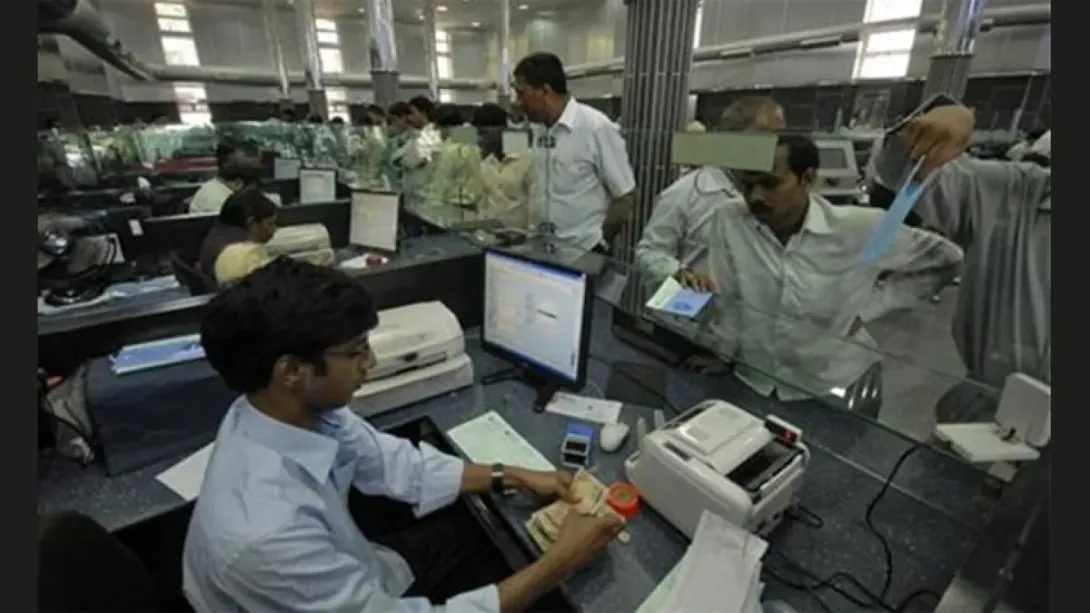
India’s public sector banking industry recorded a significant improvement in asset quality during fiscal year 2025-26, with loan write-offs falling to multi-year lows across several major lenders. The decline reflects stronger recovery mechanisms, reduced bad loan inflows, and improved credit discipline across the banking system. Major institutions including Bank of Baroda, Punjab National Bank and Union Bank of India reported some of their lowest write-off levels in years. Analysts view the trend as evidence of a broader structural recovery in India’s banking sector, driven by healthier balance sheets, improved underwriting standards, and stronger economic conditions supporting borrower repayment capacity.
Public Sector Banks Report Sharp Improvement in Asset Quality
India’s state-owned banking sector has reported a substantial decline in loan write-offs during fiscal year 2025-26, signaling a marked improvement in financial stability and credit quality across the industry.
According to an analysis of bank earnings data and investor presentations, several major public sector banks recorded their lowest write-off levels in up to eight years.
The trend reflects improving recovery performance, declining slippages, and stronger loan monitoring systems that have collectively strengthened the sector’s overall asset quality profile.
The development is particularly significant given the prolonged stress India’s public banking system experienced over the past decade due to rising non-performing assets, infrastructure-related defaults, and corporate debt distress.
The latest figures suggest the sector may now be entering a more stable and disciplined lending cycle.
Major Banks Register Multi-Year Low Write-Offs
Among the notable performers, Bank of Baroda reported write-offs of Rs 6,330 crore during FY26, representing its lowest level since fiscal year 2017-18.
Bank of India recorded write-offs of Rs 5,735 crore, the lowest since FY16, while Indian Bank posted write-offs of Rs 6,695 crore, marking its best performance since FY19.
Meanwhile, Indian Overseas Bank reported write-offs of Rs 1,189 crore during FY26, also representing a multi-year low.
Other major lenders, including Union Bank of India, Punjab National Bank and Central Bank of India, similarly demonstrated meaningful improvement in write-off trends.
The data collectively points toward a broader strengthening of financial discipline across the public banking ecosystem.
Lower Slippages Driving Sector Recovery
One of the primary factors contributing to declining write-offs has been the sharp reduction in fresh slippages — loans that newly turn non-performing.
Over recent years, banks have significantly tightened underwriting standards, enhanced risk assessment practices, and improved borrower monitoring frameworks.
As a result, the pace of bad loan formation has slowed considerably compared to the peak stress period experienced during the previous decade.
Improved corporate balance sheets, stronger economic growth, and better repayment behavior have also contributed to healthier credit quality across both retail and corporate lending segments.
Industry analysts note that reduced slippages are particularly important because they help banks preserve profitability while reducing the need for aggressive provisioning and capital erosion.
Recovery Mechanisms Becoming More Effective
Alongside lower slippages, stronger recovery efforts have also played a major role in reducing write-offs.
Banks have increasingly leveraged insolvency proceedings, one-time settlements, asset reconstruction mechanisms, and legal recovery frameworks to recover stressed assets more efficiently.
The implementation of the Insolvency and Bankruptcy Code over recent years has strengthened creditor recovery processes and improved resolution timelines for distressed accounts.
Public sector banks, which were once criticized for weak recovery capabilities, have shown measurable improvement in managing stressed assets through structured resolution strategies.
Analysts believe the banking sector’s recovery infrastructure is now significantly stronger than it was during earlier phases of the non-performing asset crisis.
Banking Sector Stability Strengthening Investor Confidence
The decline in write-offs is also expected to improve investor confidence in India’s public banking sector.
Historically, elevated write-offs have weighed heavily on profitability, valuation multiples, and capital adequacy metrics for state-owned lenders.
Lower write-offs allow banks to preserve earnings, strengthen balance sheets, and improve return ratios, making them more attractive to institutional investors.
Several public sector banks have already witnessed stronger market performance over the past two years as asset quality indicators improved steadily.
The latest financial data further reinforces the perception that India’s banking sector has moved beyond the worst phase of its asset quality stress cycle.
Market experts believe sustained improvements in credit quality could support stronger lending growth and profitability in the coming years.
Credit Discipline Emerging as Structural Shift
Industry observers increasingly view the decline in write-offs not merely as a cyclical recovery but as part of a broader structural transformation within India’s banking system.
Public sector banks have become more selective in lending decisions, particularly in sectors historically associated with elevated default risks.
There is also greater emphasis on data analytics, centralized risk management, and technology-driven monitoring frameworks to identify stress signals earlier.
The shift toward retail lending diversification has further reduced concentration risks that previously contributed to large-scale corporate loan defaults.
Analysts argue that the current improvement reflects a deeper cultural and operational change in how public banks approach risk management and credit governance.
Economic Growth Supporting Repayment Capacity
India’s relatively resilient economic environment has also supported the improvement in banking sector metrics.
Rising business activity, infrastructure spending, expanding formalization, and stronger corporate earnings have collectively enhanced borrower repayment capacity across several sectors.
Retail borrowers have similarly benefited from stable employment conditions and income growth in key urban markets.
This macroeconomic stability has allowed banks to reduce stress accumulation while maintaining relatively healthy loan growth momentum.
However, economists caution that maintaining asset quality improvements will require continued vigilance, particularly amid evolving global economic uncertainties and interest rate dynamics.
Public Banks Entering Stronger Financial Phase
The latest write-off trends suggest that India’s public sector banks are entering one of their strongest financial phases in recent years.
After enduring a prolonged period of balance sheet stress, recapitalization challenges, and regulatory scrutiny, the sector now appears significantly more stable and operationally disciplined.
Lower write-offs, improved recoveries, and healthier loan books collectively position public banks to support broader economic growth through increased credit expansion.
For policymakers, the improvement also validates years of banking sector reforms aimed at strengthening governance, transparency, and financial resilience.
As India’s economy continues expanding, the banking sector’s improved health could become a crucial pillar supporting investment, consumption, and long-term economic development.
Comments