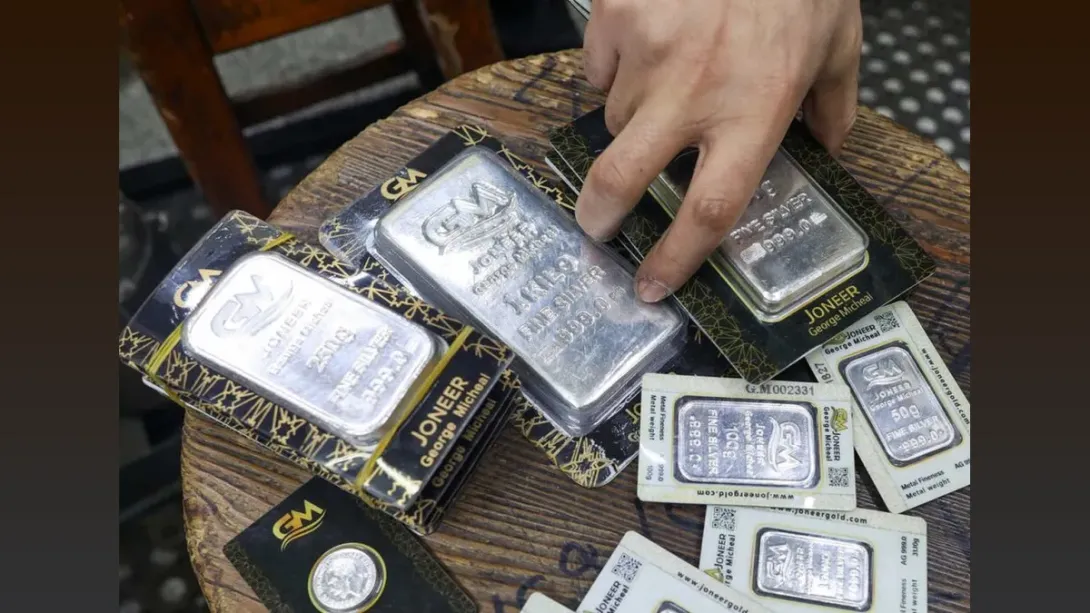
Silver prices witnessed a notable decline on Tuesday as traders reduced their exposure amid weakening market sentiment and profit-booking activity. On the Multi Commodity Exchange, silver contracts for July delivery fell by Rs. 2,411, or 0.87 percent, settling at Rs. 2,74,240 per kilogram. The downturn reflected cautious investor behavior as participants reassessed short-term price momentum in precious metals. Analysts indicated that a combination of global uncertainty, shifting speculative positions, and fluctuating industrial demand contributed to the correction. Despite the decline, broader market fundamentals surrounding inflation expectations, central bank policy, and safe-haven demand continue to influence long-term silver price dynamics.
Silver Extends Decline Amid Weak Trading Sentiment
Silver prices came under pressure on Tuesday as traders pared bullish positions in the domestic commodity market, triggering a sharp decline in futures contracts.
On the Multi Commodity Exchange of India, silver contracts scheduled for July delivery dropped by Rs. 2,411 to Rs. 2,74,240 per kilogram. The decline represented a fall of 0.87 percent during the trading session.
Market data showed business turnover reaching 2,268 lots, reflecting active participation despite the downward movement in prices.
The correction comes after a sustained period of elevated volatility in the precious metals segment, where investors have been balancing safe-haven demand against concerns surrounding global monetary conditions and industrial consumption trends.
Profit Booking Drives Market Correction
Commodity analysts said the decline was primarily linked to profit-booking activity after recent price gains encouraged traders to lock in returns.
Silver has experienced strong momentum in recent months due to:
Persistent geopolitical uncertainty
Inflation-related hedging
Industrial demand linked to renewable energy and electronics manufacturing
Speculative buying in global commodities markets
However, sharp rallies in precious metals frequently attract short-term liquidation pressure as traders rebalance positions.
The latest decline suggests investors may be adopting a cautious approach ahead of key global economic indicators and central bank policy signals.
Global Factors Continue to Influence Precious Metals
Silver occupies a unique position within global financial markets because it functions both as:
A precious investment asset
An industrial metal used in manufacturing
As a result, silver prices are influenced by multiple economic variables simultaneously.
Industrial Demand Remains Critical
Silver is widely used in:
Solar panel production
Electric vehicles
Semiconductor manufacturing
Medical technology
Consumer electronics
Any slowdown in manufacturing activity or industrial output expectations can weigh on prices.
Interest Rate Expectations
Precious metals are highly sensitive to global interest rate trends. Rising yields often reduce the attractiveness of non-interest-bearing assets such as silver and gold.
Investors continue to monitor monetary policy decisions from major central banks, particularly regarding inflation management and liquidity conditions.
Volatility Expected to Persist
Market participants believe volatility in silver prices may continue over the coming weeks as traders react to:
Currency fluctuations
Inflation readings
Economic growth forecasts
Global commodity demand patterns
Analysts noted that while short-term corrections are common, silver’s long-term outlook remains supported by structural industrial demand linked to the global energy transition.
The rapid expansion of green energy infrastructure and electrification projects continues to strengthen the metal’s strategic importance in international supply chains.
Investor Sentiment Remains Mixed
Investor sentiment in the silver market currently reflects a balance between optimism and caution.
Bullish investors point toward:
Long-term industrial demand growth
Inflation hedging potential
Limited global mining expansion
Meanwhile, bearish traders remain concerned about:
Slower economic growth
Weak manufacturing data
Stronger currency movements affecting commodity pricing
This divergence has increased speculative activity across futures markets, contributing to frequent price swings.
Outlook for the Silver Market
Despite Tuesday’s decline, many commodity strategists believe silver could remain an important asset class for both institutional and retail investors.
The metal’s dual role as an industrial resource and financial hedge gives it broader strategic significance compared with many other commodities.
However, experts caution that near-term price movement is likely to remain highly sensitive to macroeconomic developments and investor positioning within futures markets.
For traders, the recent correction highlights the importance of disciplined risk management in an increasingly volatile commodity environment.
Conclusion
Silver prices retreated sharply on Tuesday as traders reduced bullish exposure and engaged in profit-booking activity within the futures market. The decline on the Multi Commodity Exchange underscores the fragile sentiment currently shaping precious metals trading.
Although short-term volatility continues to dominate market behavior, silver’s long-term fundamentals remain closely tied to industrial demand growth, inflation dynamics, and the evolving global economic outlook.
As financial markets navigate uncertainty surrounding interest rates, growth expectations, and geopolitical risks, silver is expected to remain one of the most closely watched commodities in the investment landscape.
Comments