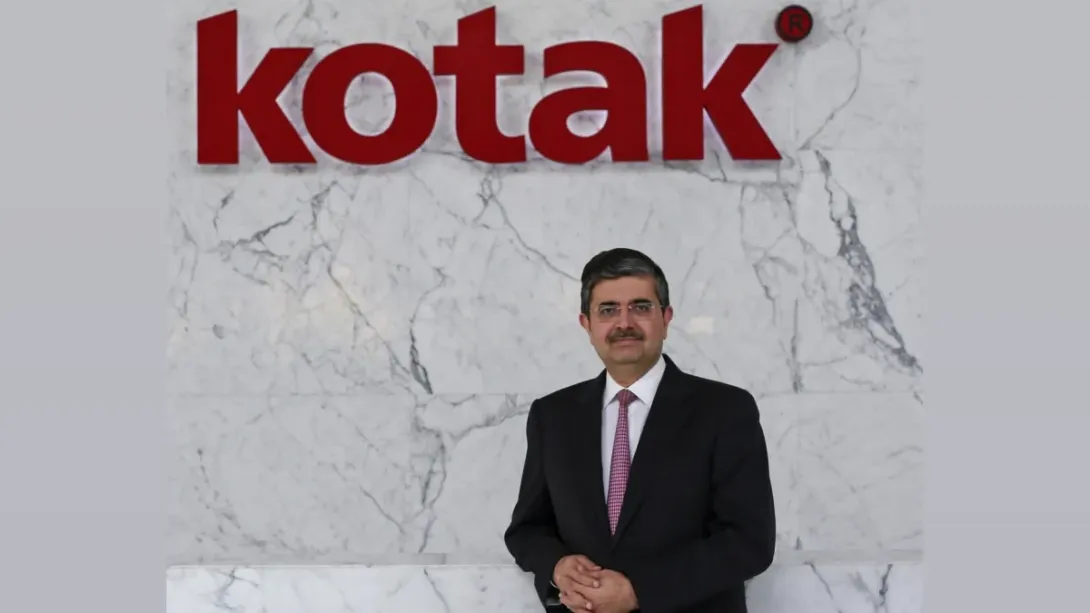
Finance veteran Uday Kotak has emphasized the need for India to reduce its reliance on foreign capital and strengthen domestic sources of long-term risk funding to achieve genuine economic self-reliance. Speaking at a Confederation of Indian Industry (CII) event, he argued that true independence comes when a country does not depend on external financial power or capital flows. He linked this idea to broader national economic behavior, referencing Prime Minister Narendra Modi’s call to promote domestic spending. Kotak’s remarks highlight growing policy and industry focus on deepening India’s internal capital markets for sustainable growth.
Push for Financial Self-Reliance Gains Policy Attention
Uday Kotak underlined a structural challenge facing India’s growth trajectory: its continued dependence on foreign capital inflows.
According to him, long-term economic resilience requires the development of a robust domestic capital base capable of funding large-scale investment needs without excessive reliance on external sources. He stressed that financial self-reliance is not merely a fiscal objective but a strategic necessity in a globally uncertain economic environment.
His remarks align with broader policy discussions around strengthening India’s capital markets and reducing vulnerability to global liquidity cycles.
Defining True Economic Independence
During his address at the Confederation of Indian Industry (CII), Uday Kotak offered a conceptual definition of economic independence.
He noted that a truly self-reliant nation is one that does not depend on “somebody else’s money or power” for its economic growth. This perspective highlights the importance of domestic savings, institutional capital formation, and long-term investment channels within the country.
The statement reflects a growing recognition among policymakers and industry leaders that financial sovereignty is closely linked to internal capital market depth.
Strengthening Domestic Risk Capital Ecosystem
A central theme of Kotak’s argument was the need to build a strong domestic pool of long-term risk capital.
Such capital typically comes from institutional investors, pension funds, insurance companies, and high-net-worth individuals who invest in equity and long-term infrastructure projects. Expanding this base is critical for funding India’s infrastructure expansion, industrial growth, and innovation-driven sectors.
Uday Kotak emphasized that without sufficient domestic risk capital, India will remain exposed to global financial volatility and shifting investor sentiment.
Cultural and Economic Linkages in Spending Behavior
Kotak also referenced remarks by Prime Minister Narendra Modi encouraging citizens to prioritize domestic spending, including hosting weddings within India rather than abroad.
He suggested that such cultural and economic choices have broader implications for national capital formation. By retaining spending within the domestic economy, India can strengthen internal demand cycles, support local industries, and enhance economic multiplier effects.
This linkage between consumption behavior and macroeconomic strength reflects an increasingly integrated view of cultural economics and financial policy.
Capital Market Depth as a Strategic Priority
The comments by Uday Kotak come at a time when India is actively working to deepen its capital markets and expand institutional participation.
A deeper financial ecosystem is essential for mobilizing long-term savings into productive investments. This includes improving access to equity markets, expanding bond market liquidity, and encouraging pension and insurance funds to take on greater exposure to domestic assets.
Such structural reforms are seen as key to reducing dependence on volatile cross-border capital flows.
Conclusion: Building Internal Strength for External Stability
The broader message from Uday Kotak underscores a strategic shift in India’s economic thinking—from reliance on global capital to building internal financial strength.
By expanding domestic risk capital, encouraging local investment, and strengthening institutional financial frameworks, India can reduce external vulnerabilities while sustaining long-term growth.
As discussions on economic self-reliance evolve, the emphasis is increasingly shifting toward not just production independence, but also financial independence—anchored in deep, resilient domestic capital markets.
Comments