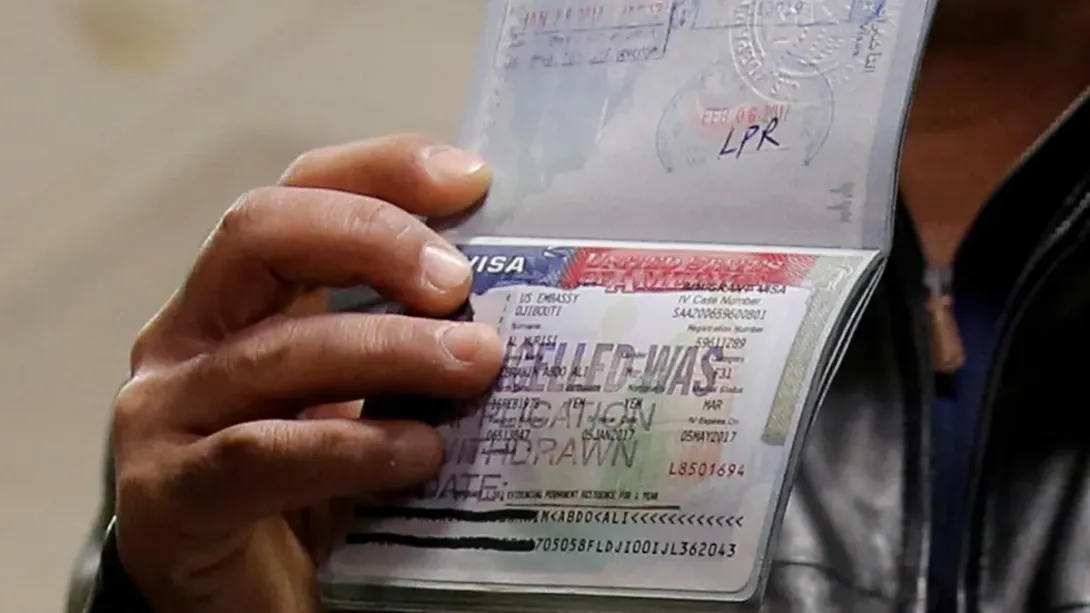
A significant tightening of US immigration policies in 2025 has led to a notable decline in visa approvals, with India and China bearing the brunt of the reduction. Data indicates that approximately 2.5 lakh fewer visas were issued in the first eight months of the year compared to the same period in 2024. The decline, driven largely by reduced approvals for students and skilled workers, signals a shift in US immigration priorities. This contraction has implications for global talent mobility, higher education flows, and workforce dynamics, particularly affecting economies that have historically depended on access to US opportunities.
Sharp Decline in Visa Issuance
The United States witnessed a marked contraction in visa approvals during the first eight months of 2025, reflecting the impact of stricter immigration measures introduced by the administration. Official data reveals that visa issuances fell by 11 percent compared to the corresponding period in 2024.
In absolute terms, this translates to nearly 2.5 lakh fewer visas granted, underscoring a substantial shift in immigration trends. The reduction spans both permanent residency permits and temporary visas issued to students, professionals, and family members of residents.
India and China Most Affected
Among all nationalities, applicants from India and China experienced the steepest decline. Combined visa approvals for these two countries dropped by approximately 84,000 during the review period.
This downturn is particularly significant given the historically high volume of students and skilled workers migrating from these nations to the United States. The contraction suggests a tightening pipeline for talent inflows, especially in sectors reliant on international expertise.
Impact on Students and Skilled Workforce
A major contributor to the decline has been a reduction in student and employment-based visas. Universities and technology-driven industries, which depend heavily on international talent, are likely to feel the ripple effects.
For students, fewer approvals may alter global education choices, potentially redirecting demand toward alternative destinations. Similarly, companies reliant on foreign professionals could face constraints in talent acquisition, potentially impacting innovation and productivity.
Broader Economic and Policy Implications
The tightening of visa norms reflects a broader recalibration of immigration policy, possibly aimed at addressing domestic labor concerns and national security priorities. However, such measures also carry economic trade-offs.
Reduced inflows of skilled workers and international students may impact sectors such as technology, research, and higher education—areas where global talent has traditionally played a pivotal role.
Tourist Visa Trends Also Decline
While the primary data focuses on work and residency visas, tourist visa approvals also registered a decline during the same period. This points to a broader slowdown in cross-border mobility, extending beyond employment and education.
The combined effect suggests a more restrictive overall immigration environment, with implications for travel, tourism, and related industries.
Global Talent Mobility at a Crossroads
The evolving immigration landscape highlights a critical juncture for global talent mobility. Countries like India and China, which have long contributed significantly to the US talent pool, may increasingly explore alternative markets.
At the same time, competing economies could capitalize on this shift by attracting displaced talent, thereby reshaping global innovation hubs and workforce distribution.
Conclusion
The decline in US visa approvals in 2025 marks a decisive shift in immigration dynamics, with India and China disproportionately affected. As policy priorities evolve, the long-term implications for global talent flows, education systems, and economic competitiveness remain profound.
For businesses, policymakers, and aspiring migrants alike, adapting to this changing landscape will be crucial in navigating the future of international mobility.
Comments